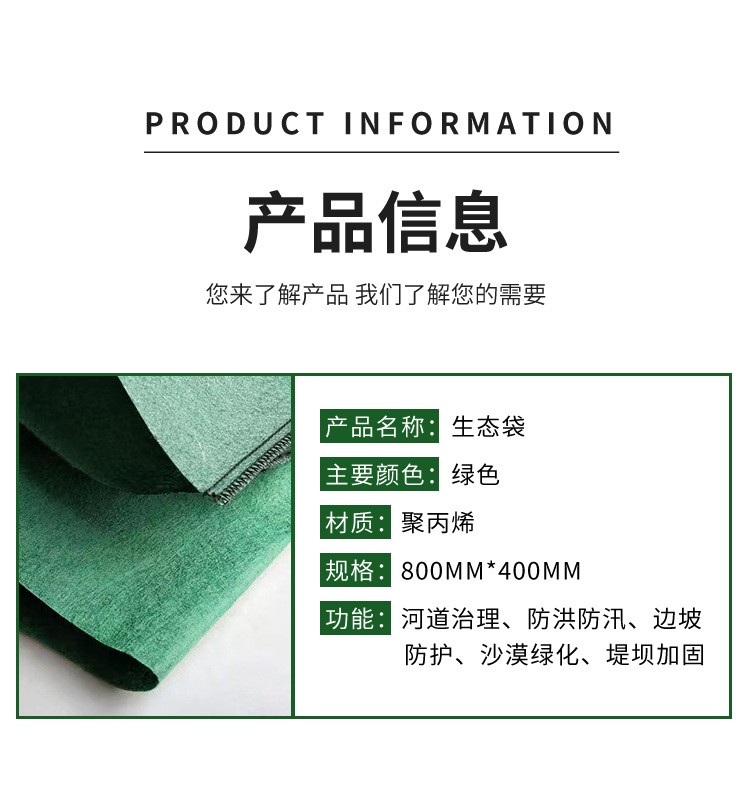
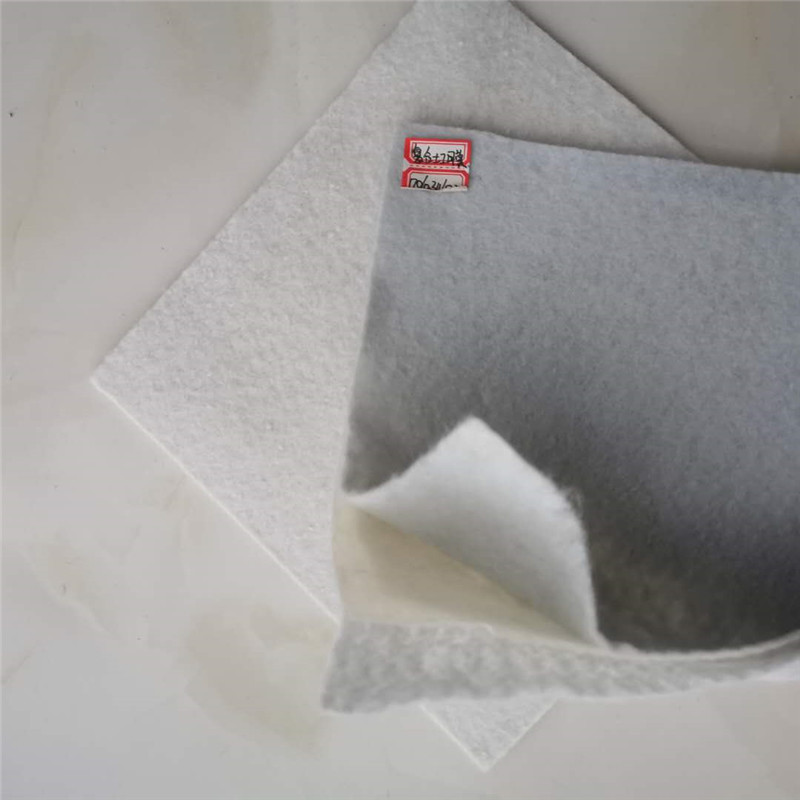


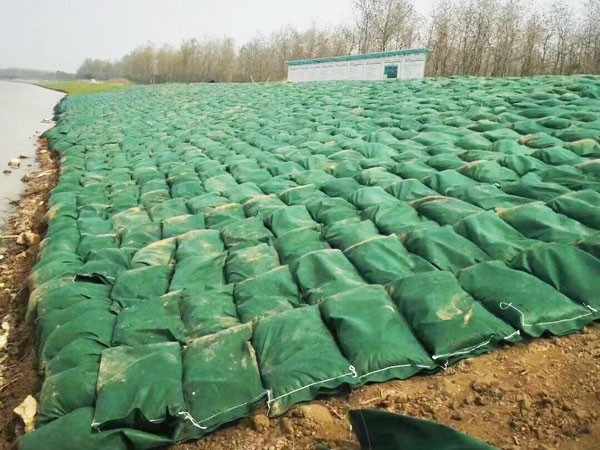
Eco-bags are bags made from double-sided ironed needle-punched non-woven fabric processed from polypropylene (PP) or polyester fiber (PET) as raw materials. Their thickness, unit mass, physical and mechanical properties, shape, fiber type, mode of stress, direction, geometric dimensions, water permeability, and equivalent pore size suitable for plant growth are strictly selected to resist ultraviolet (UV). They are characterized by UV resistance, aging resistance, non-toxicity, non-flammability, and crack-stop properties, truly achieving zero pollution. They are mainly used in constructing flexible ecological slopes. Eco-bag slope protection and greening is one of the important construction methods for barren mountains, mine restoration, highway slope greening, riverbank protection, and inland river remediation.
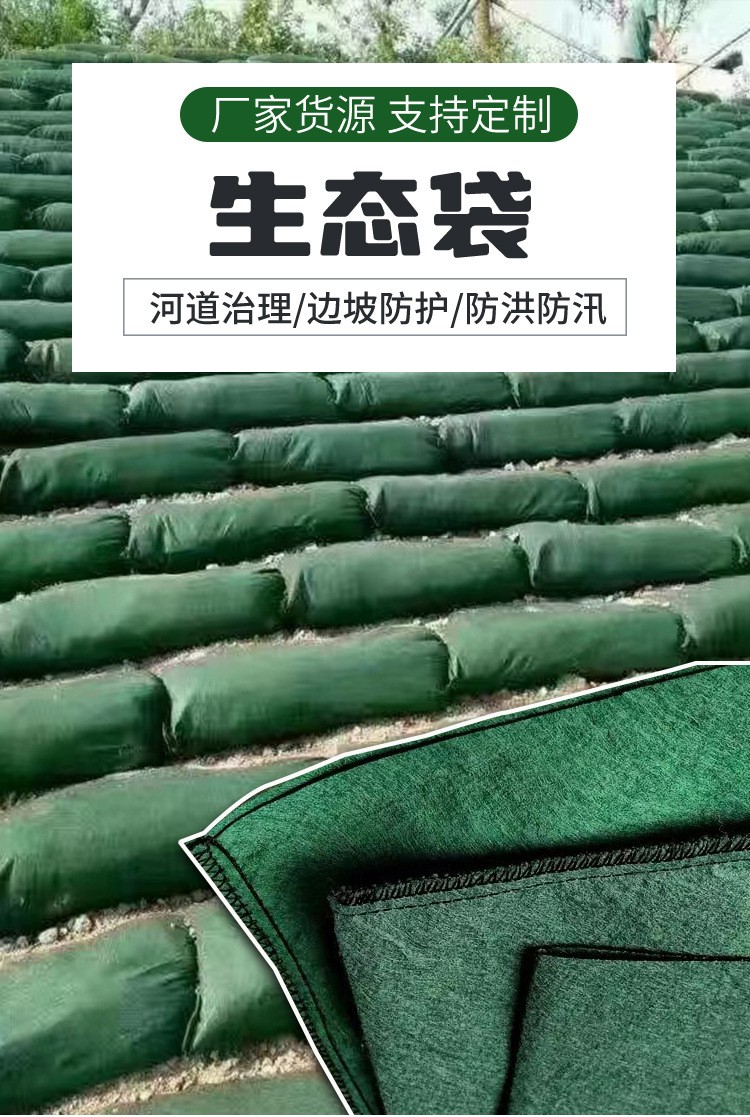
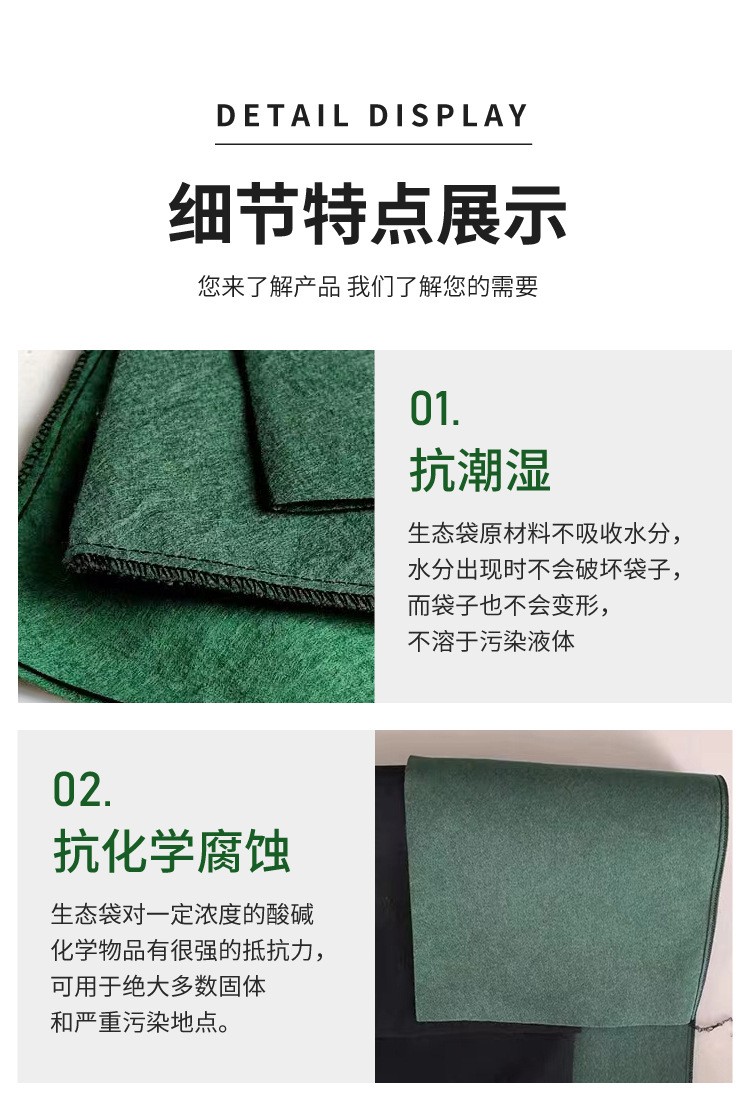
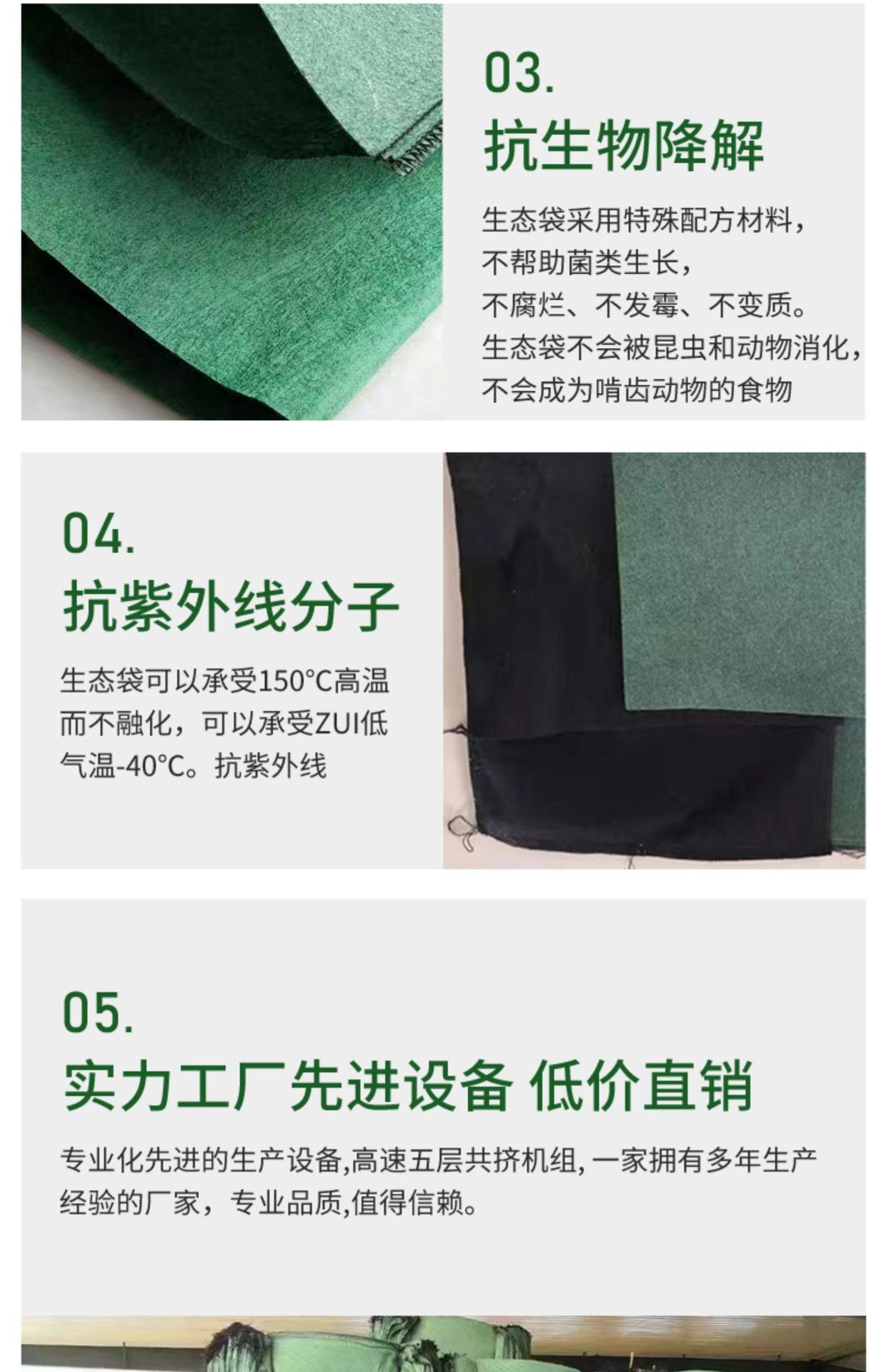
Eco-bags have excellent physical and chemical properties. This specially formulated material can resist UV erosion, is unaffected by soil chemicals, does not undergo quality changes or decay, is permanently non-degradable, can resist insect damage, is anti-aging, non-toxic, resistant to acid, alkali, and salt erosion as well as microbial decomposition, allows water to pass but not soil, is plant-friendly, and suitable for vegetation greening.