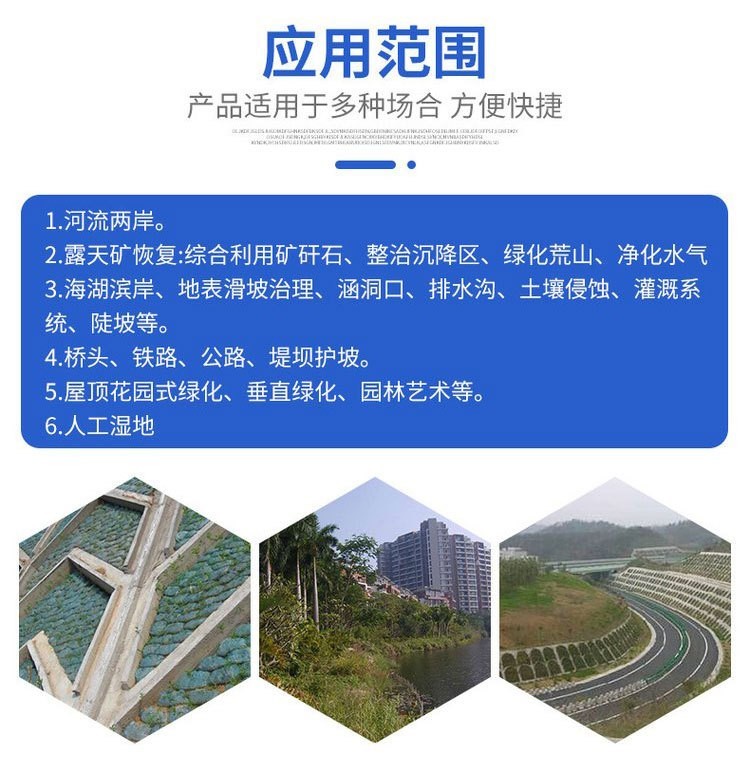
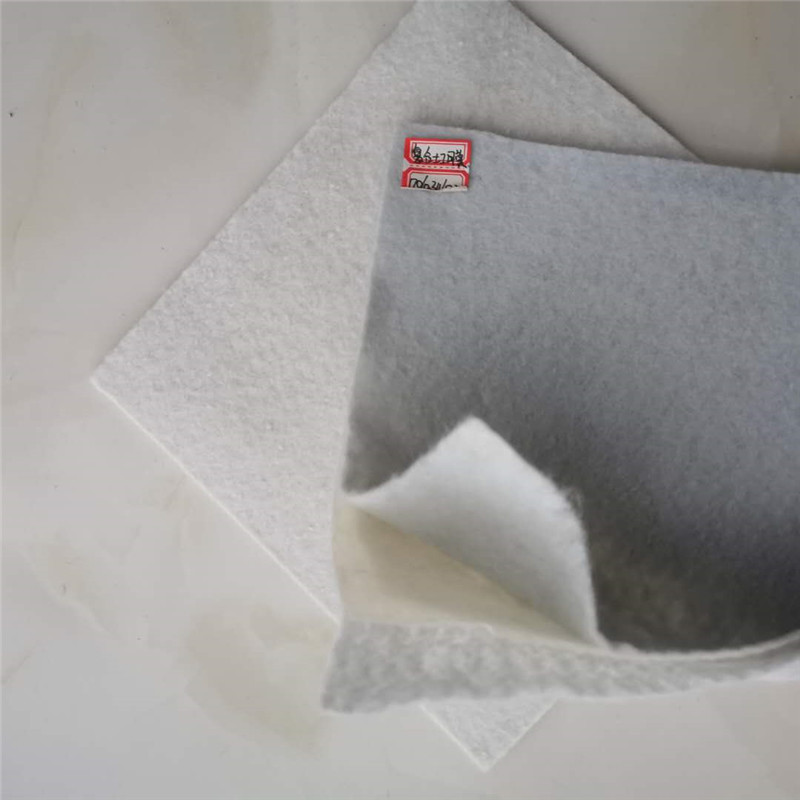

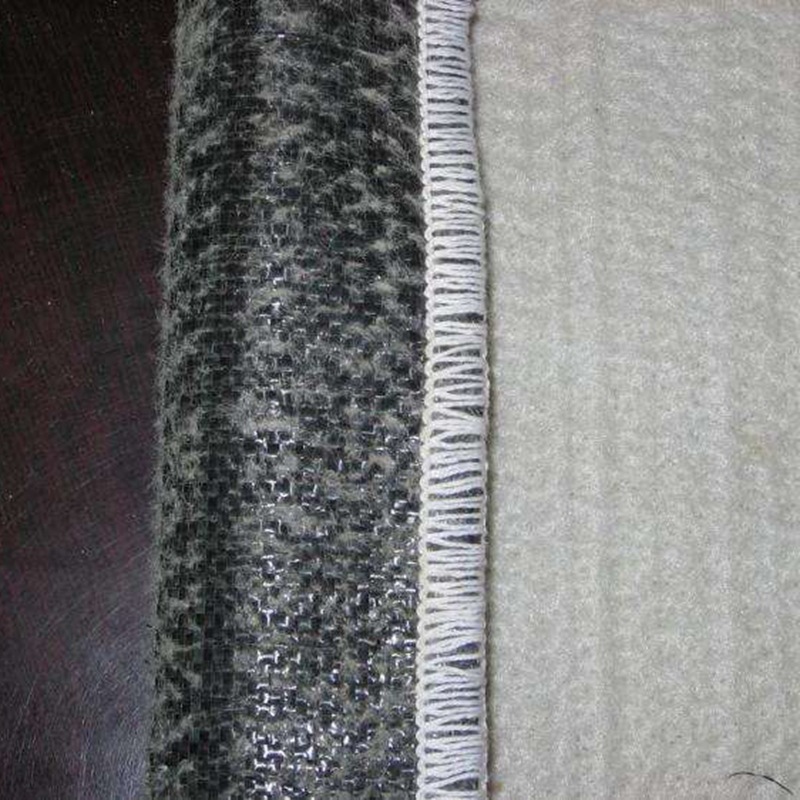

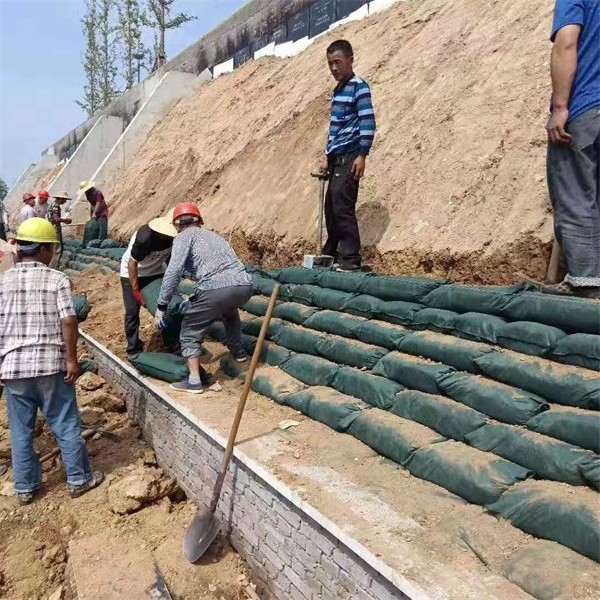
Eco-bags are bags made from double-sided sintered needle-punched nonwoven fabrics using polypropylene (PP) or polyester fiber (PET) as raw materials. With full consideration of requirements from disciplines such as material mechanics, hydraulics, biology, and botany, strict selection was applied to indicators such as the thickness of the eco-bag, unit mass, physical and mechanical properties, shape, fiber type, stress method and direction, geometric dimensions, water permeability, and equivalent pore size to ensure plant growth. They feature UV resistance, aging resistance, non-toxicity, non-flammability, and crack non-propagation, truly achieving zero pollution.
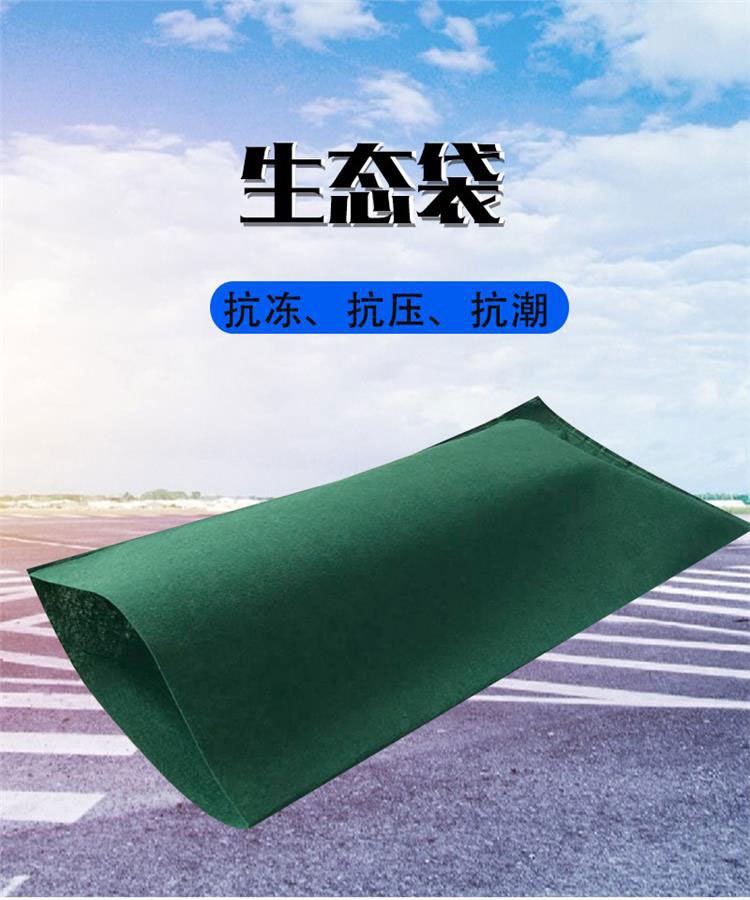
Eco-bags possess excellent physical and chemical properties. This specially formulated material can resist UV erosion, is unaffected by chemicals in the soil, does not degrade or rot, is permanently non-degradable, resists insect damage, ages slowly, is non-toxic, and resists corrosion from acids, alkalis, salts, and microbial decomposition. It allows water to pass through but not soil, is plant-friendly, and supports vegetation growth. As a new type of slope component material, it offers the following environmentally universal advantages:
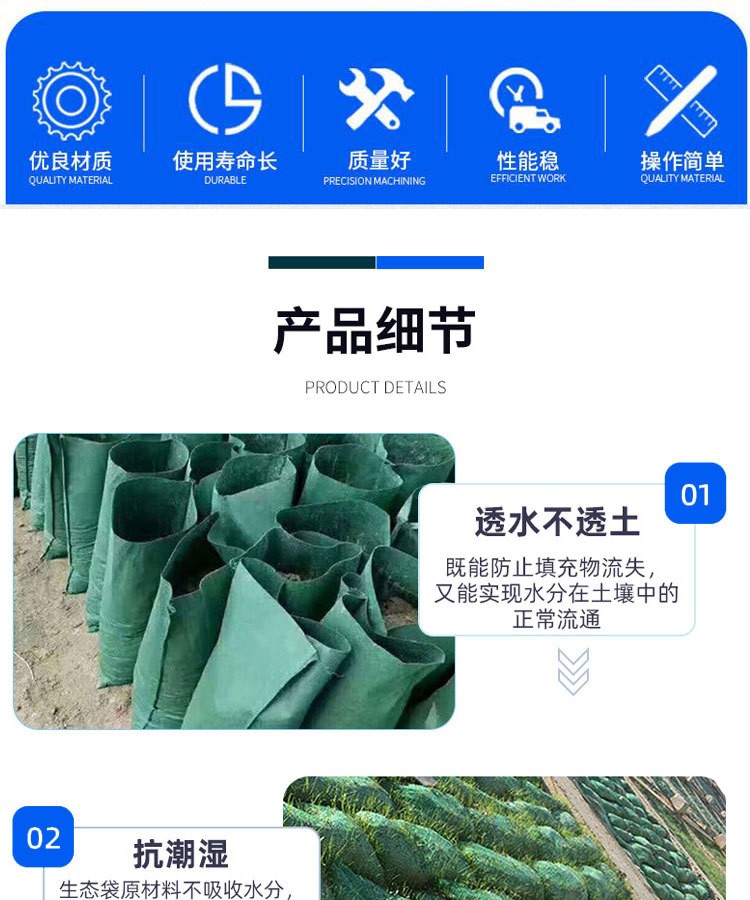
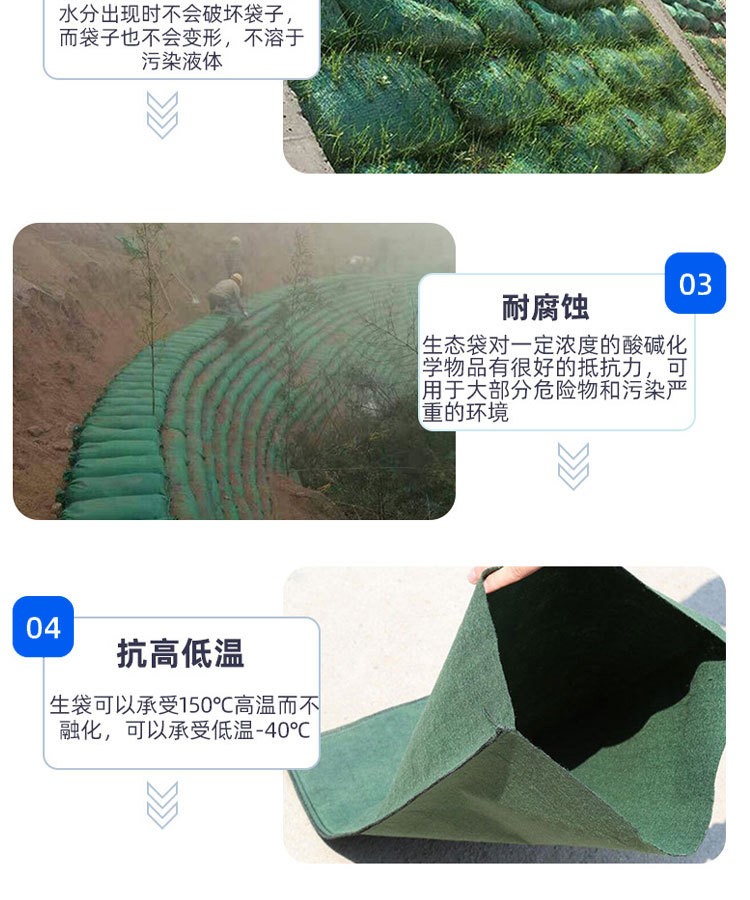
Eco-bags have a targeted filtration function that allows water to pass through but not soil, preventing the loss of fill materials (a mixture of soil and nutrients) while maintaining normal water exchange within the soil. Water necessary for plant growth is effectively retained and replenished in a timely manner, making them very plant-friendly and allowing plants to grow freely through the bag. Roots penetrate into the engineering foundation soil, functioning like countless anchors that re-secure the bag to the main body. The longer the time, the more secure it becomes, further achieving the goal of constructing a permanently stable slope and significantly reducing maintenance costs.