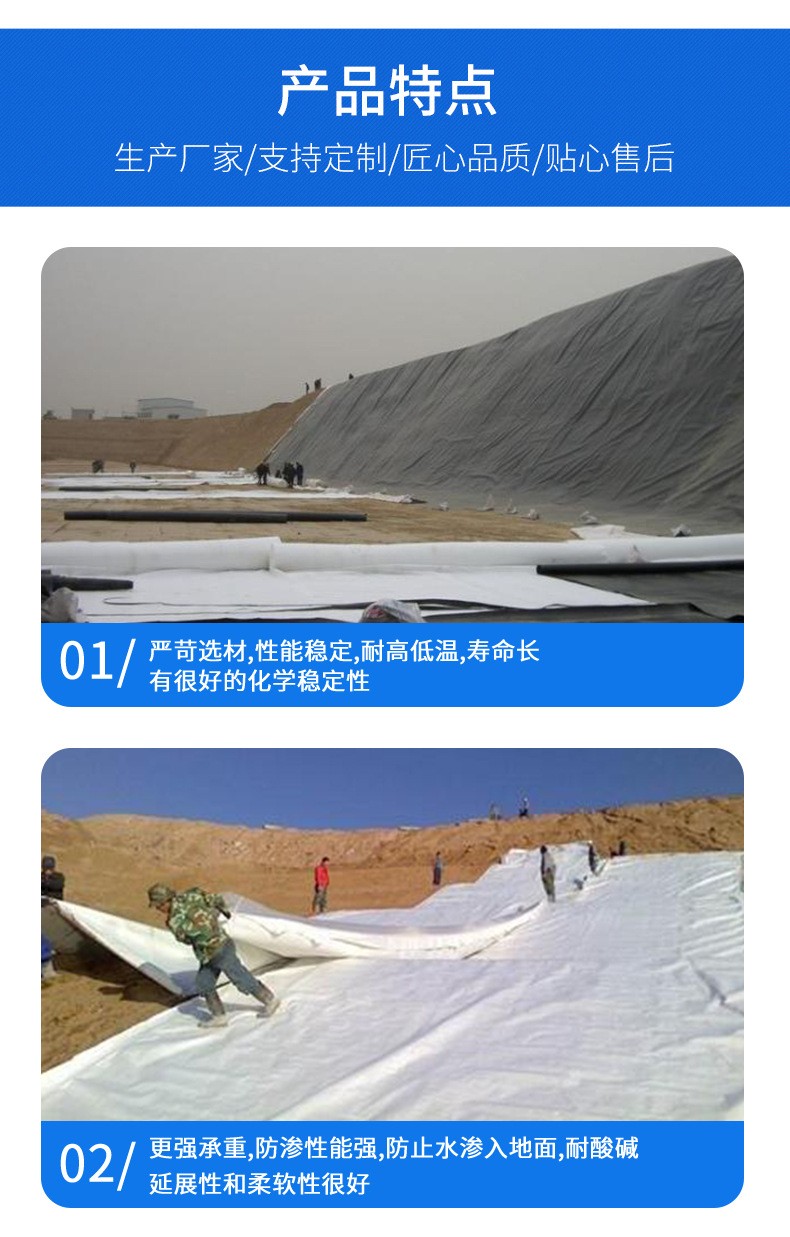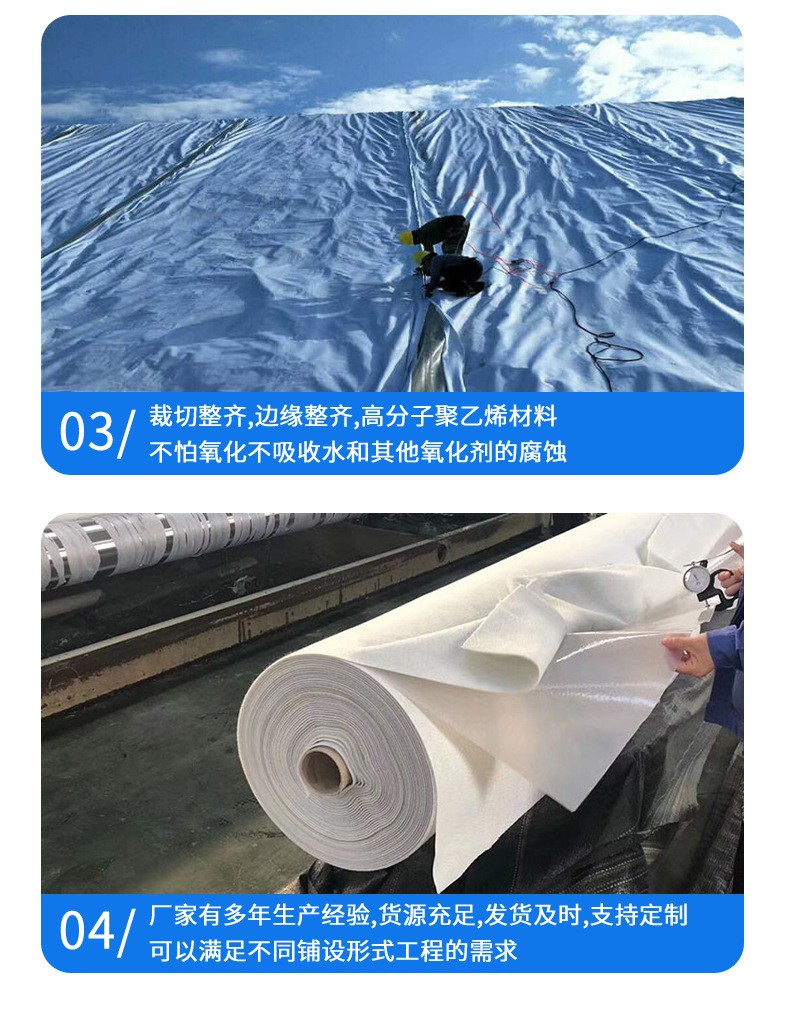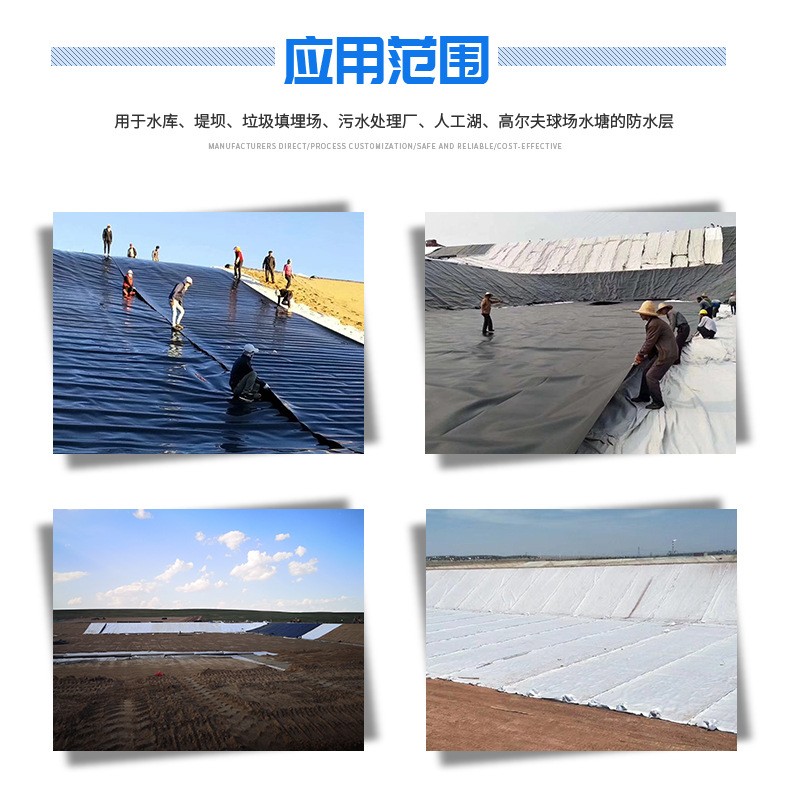
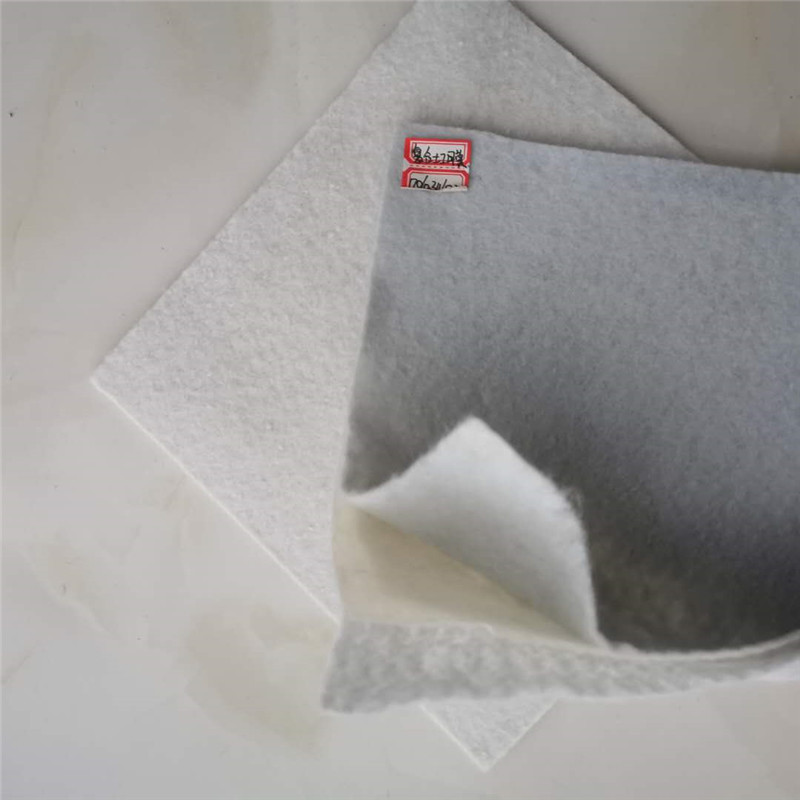

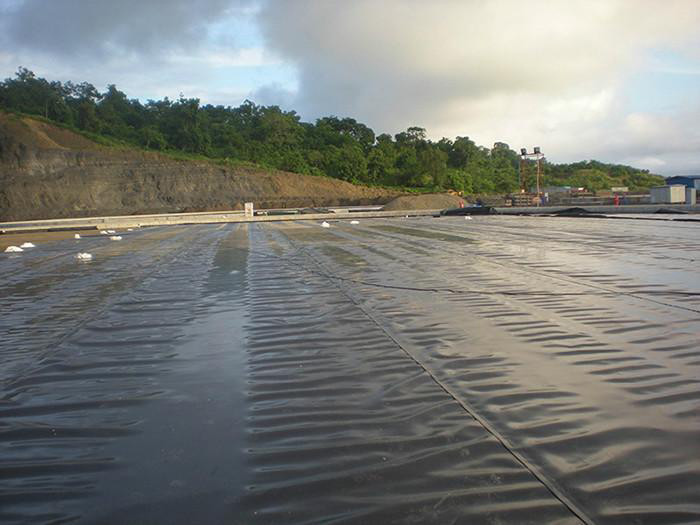
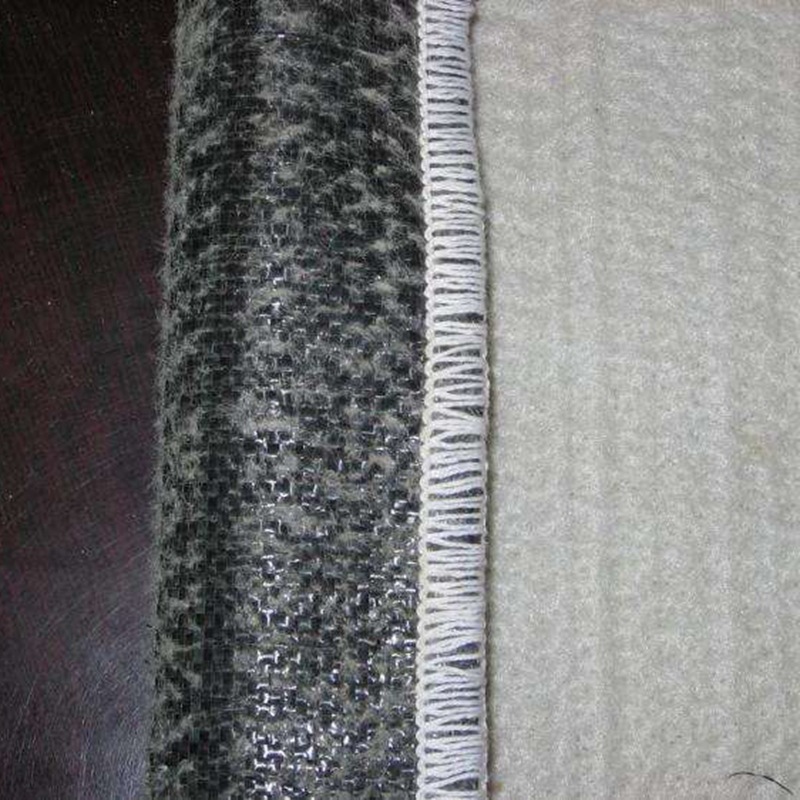

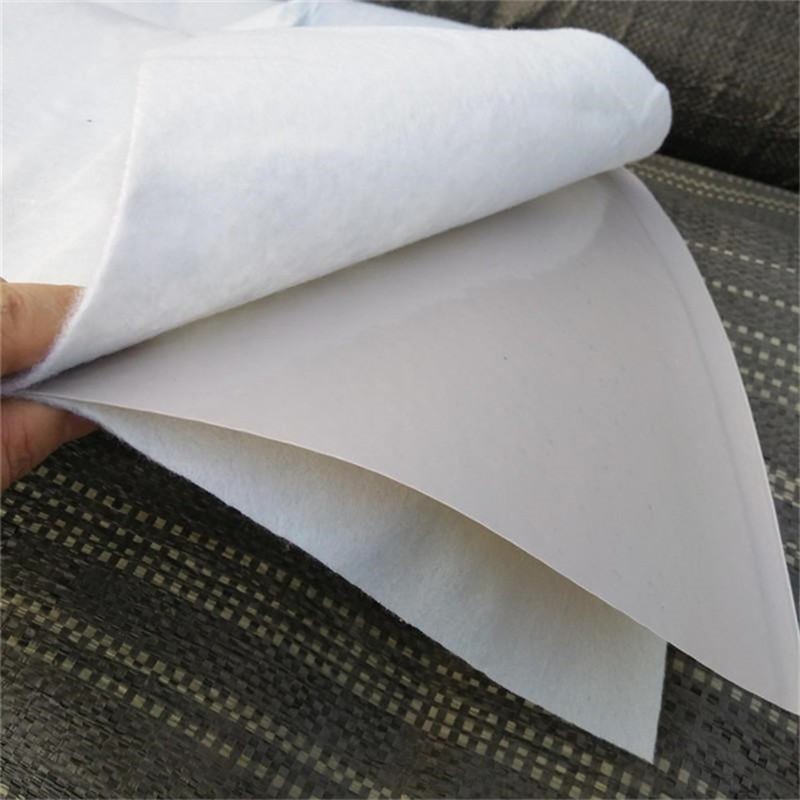
Characteristics of Composite Geomembranes: Composite geomembranes are made by hot-pressing a polyethylene geomembrane as the impermeable layer with nonwoven geotextiles that have excellent separation, drainage, and waterproof performance. Common types include one fabric-one membrane, two fabric-one membrane, or multiple fabric-multiple membrane combinations. Composite geomembranes have a width of 4-6 meters and a thickness of 200-1500 grams, with complete specifications available. They feature high strength, good elongation, high deformation modulus, resistance to acids, alkalis, and corrosion, aging resistance, good impermeability, and are unaffected by the climate. Composite geomembranes are primarily used in hydraulic dams, road construction, airports, drainage, buildings, environmental protection, water supply, and other projects. They function as impermeable barriers, protective layers, and reinforcements in engineering applications. The service life of composite geomembranes is mainly determined by whether the plastic film retains its waterproof and impermeable properties. According to Soviet national standards, a polyethylene film with a thickness of 0.2 mm and stabilized for hydraulic use can last 40-50 years in clean water conditions and 30-40 years in wastewater conditions. Therefore, the service life of composite geomembranes is sufficient to meet the requirements for dam impermeability.