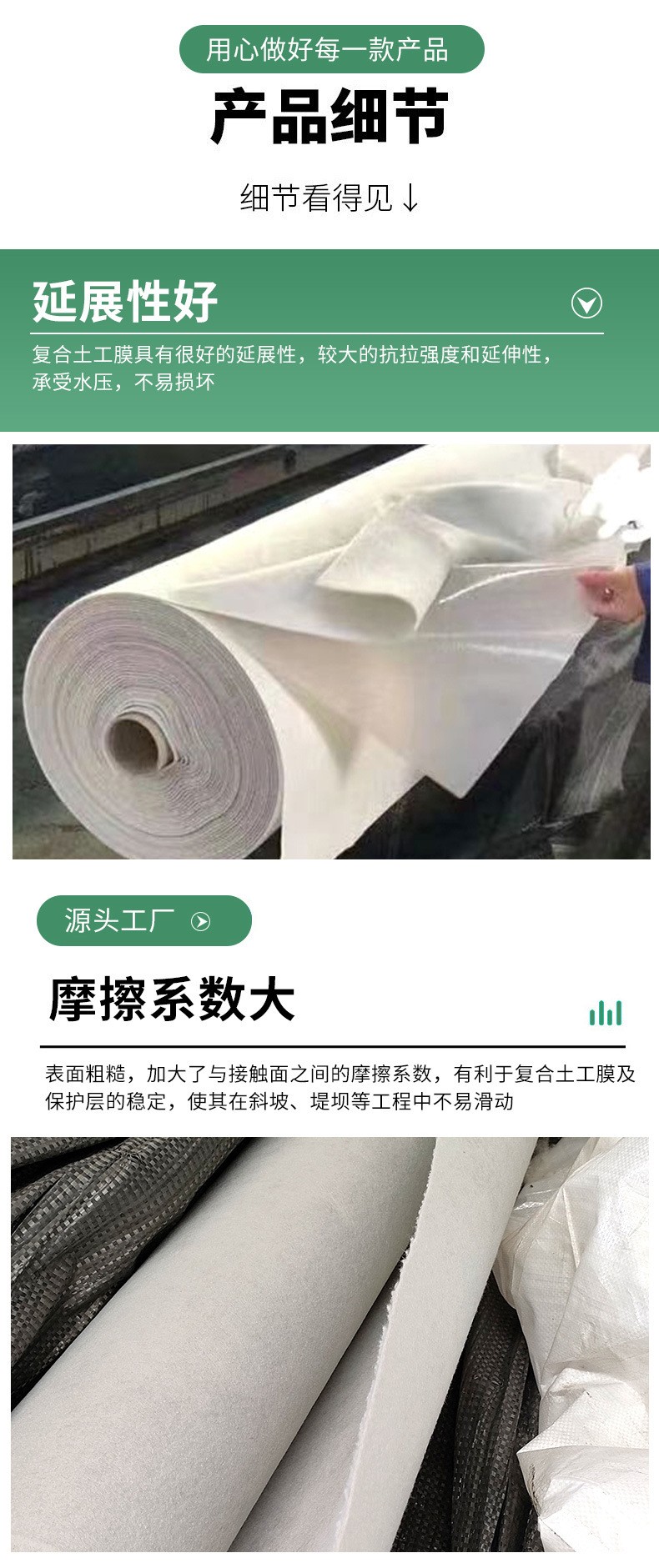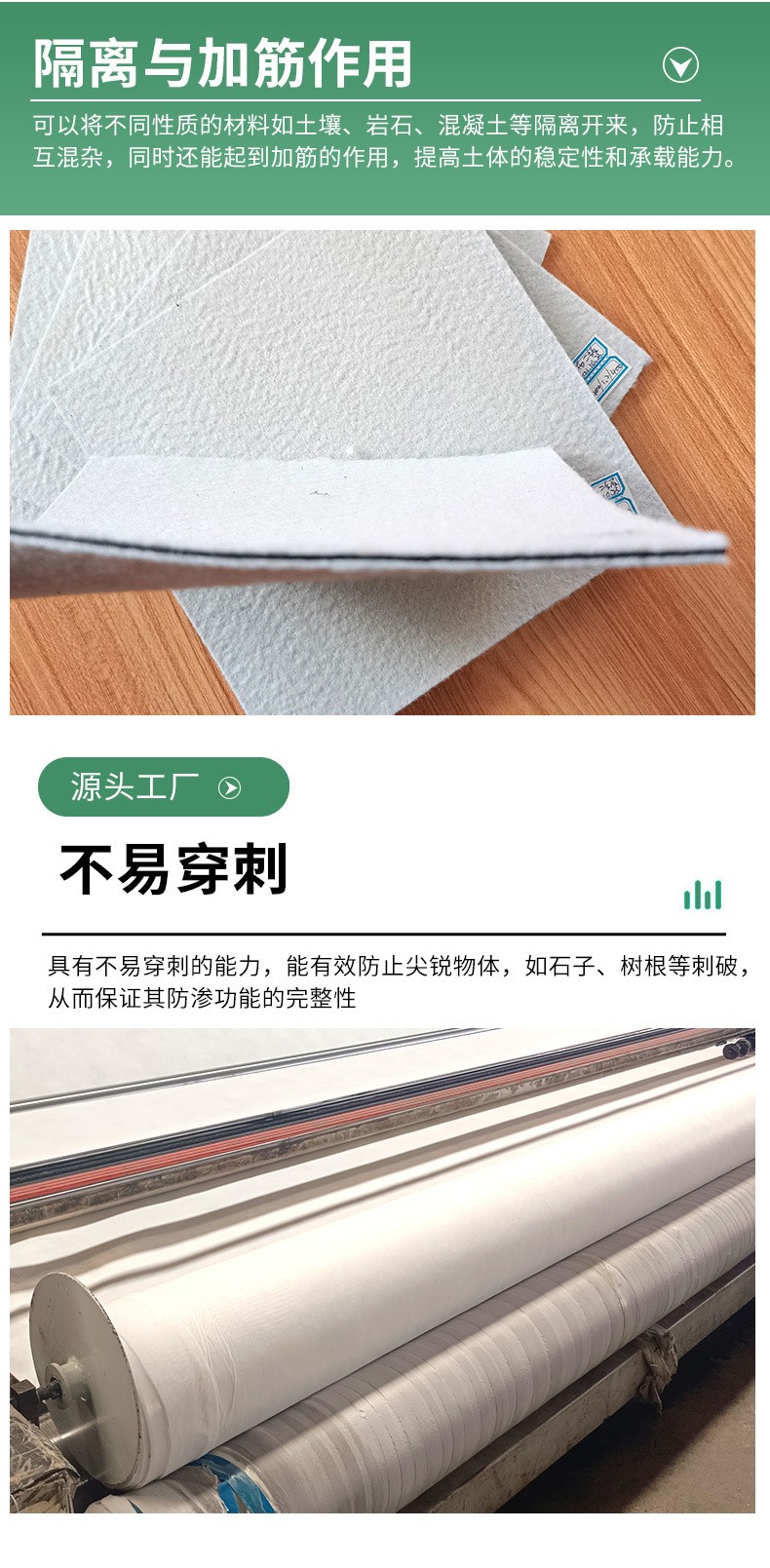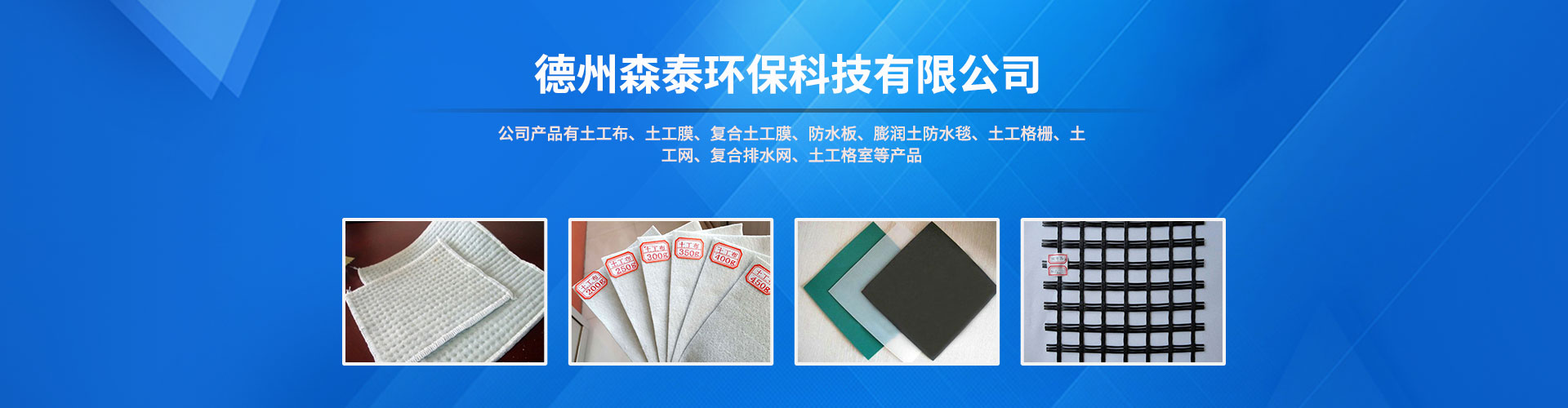
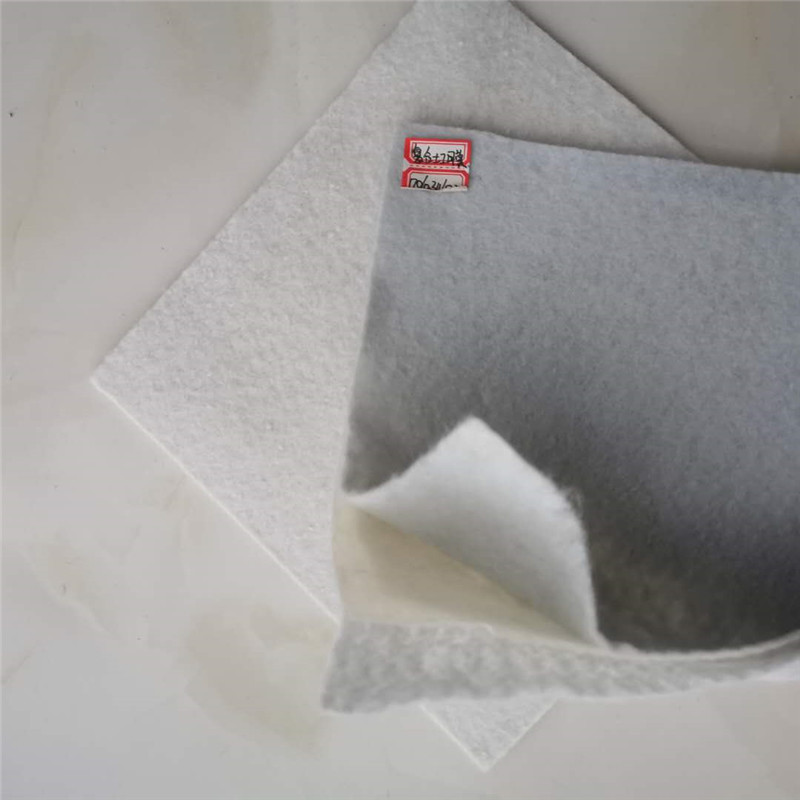

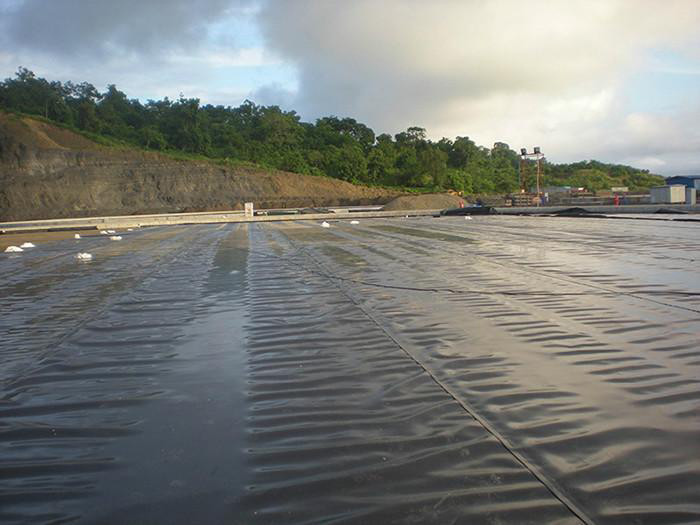
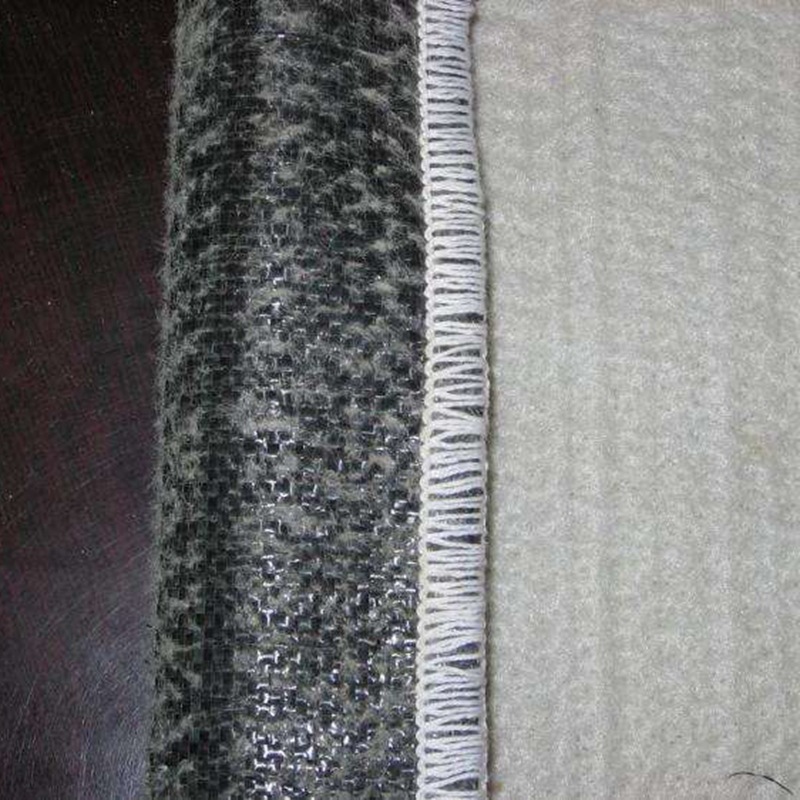

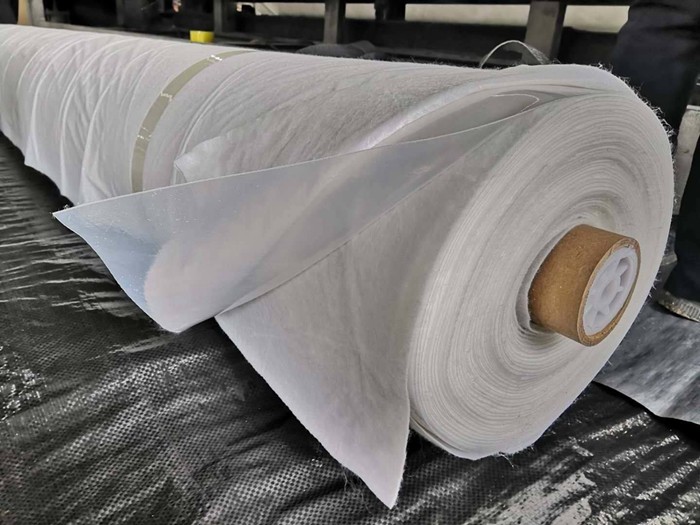
The composite geomembrane has a width of 4-6 meters and a weight of 200–1500 grams per square meter, with high physical and mechanical performance indicators such as tensile strength, tear resistance, and puncture resistance. The product features high strength, good elongation performance, high deformation modulus, resistance to acid and alkali, corrosion resistance, aging resistance, and excellent impermeability. It can meet the needs of civil engineering projects in water conservancy, municipal works, construction, transportation, subways, tunnels, and other engineering projects for impermeability, separation, reinforcement, and crack prevention. It is commonly used for impermeability treatment of dams and drainage channels, as well as pollution prevention in waste disposal sites.
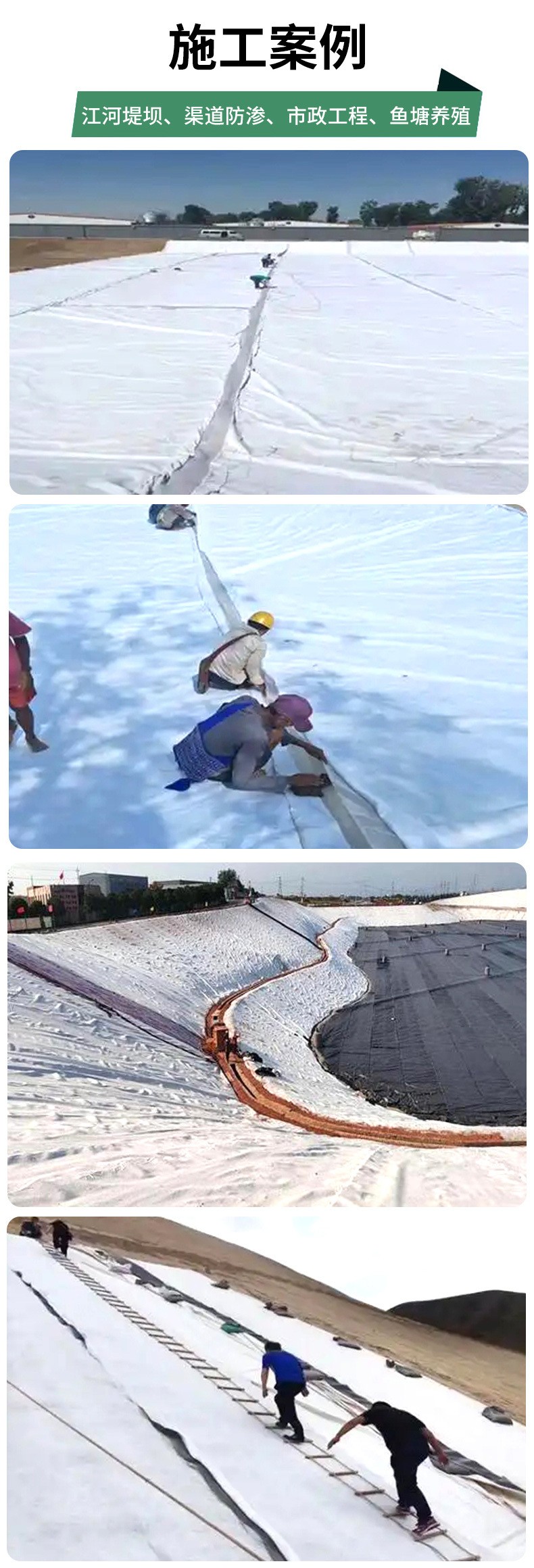
Construction
Composite geomembranes are made by passing one or both sides of the membrane through an oven with far-infrared heating, and then pressing the geotextile and geomembrane together using guide rollers to form a composite geomembrane. With the advancement of production technology, there is also a casting method for producing composite geomembranes.
The geotextile serves as a protective layer for the geomembrane, preventing damage to the impermeable layer. To reduce UV exposure and enhance aging resistance, it is best to lay it using a burial method. During construction, first level the base with small-diameter sand or clay, then lay the geomembrane. The geomembrane should not be stretched too tightly; both ends buried in the soil should be slightly undulating. Finally, apply a transitional layer of about 10 cm of fine sand or clay over the laid geomembrane. Place 20-30 cm of large stones as a protective anti-scour layer. During construction, care should be taken to avoid directly dropping stones onto the geomembrane. It is best to lay the protective layer while simultaneously laying the membrane.