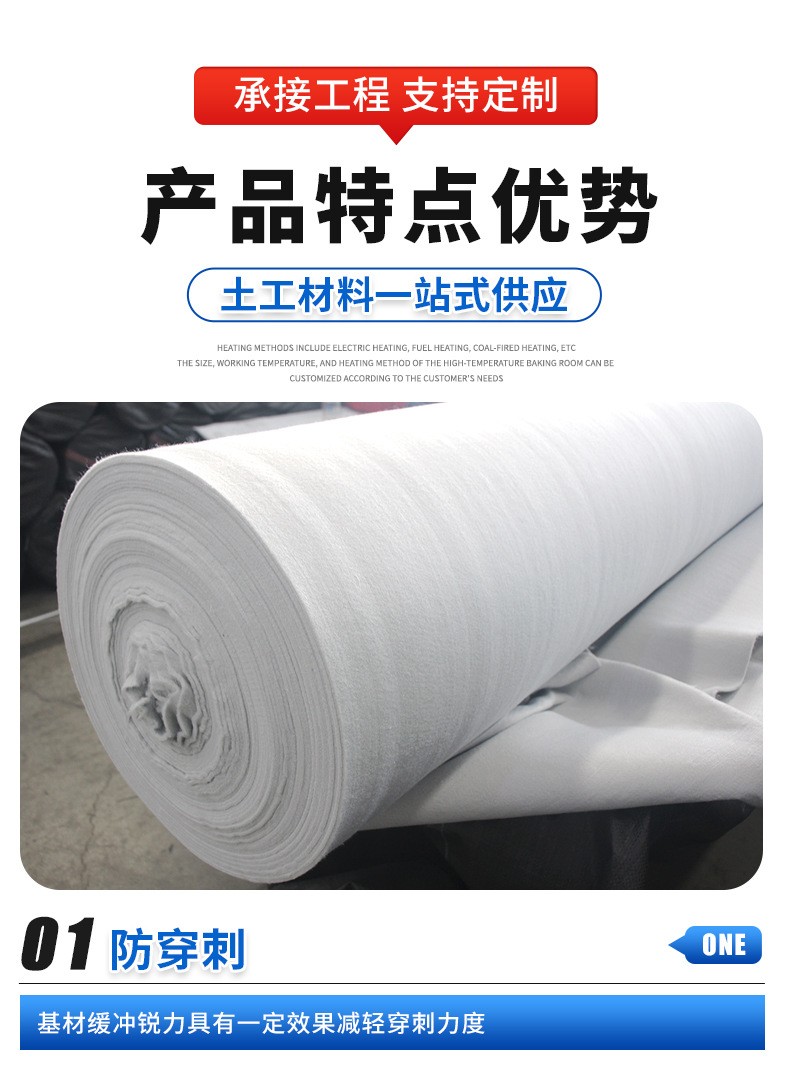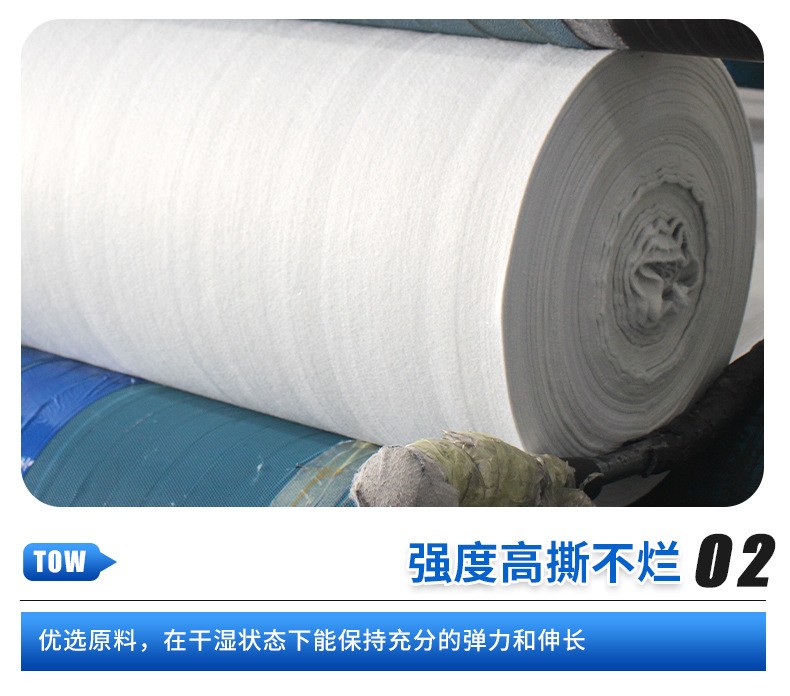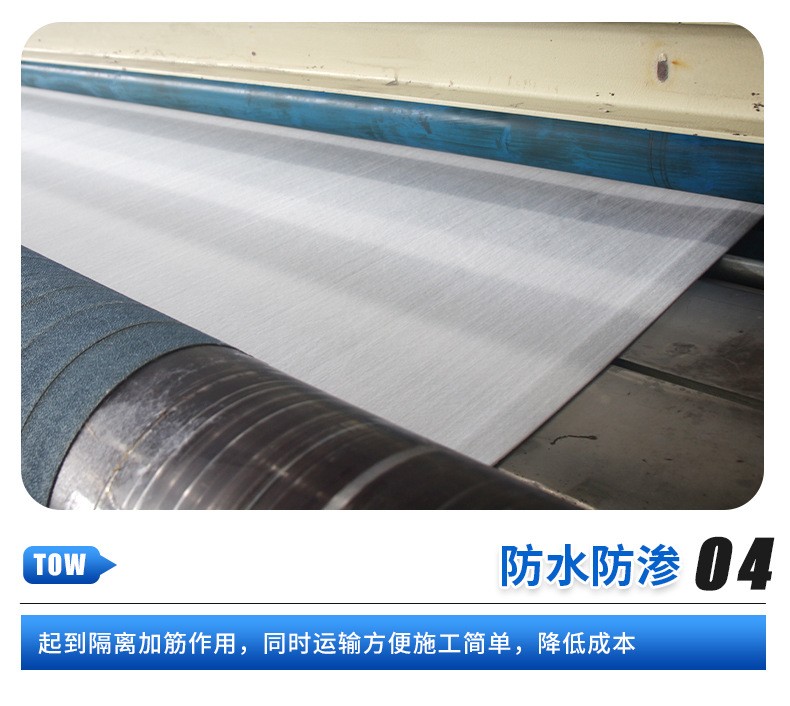
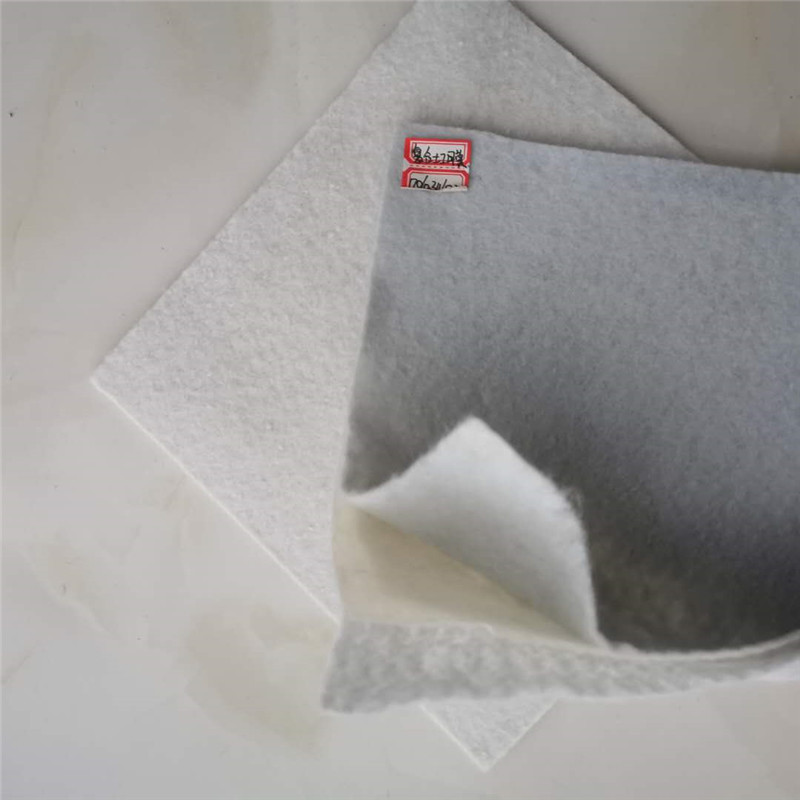

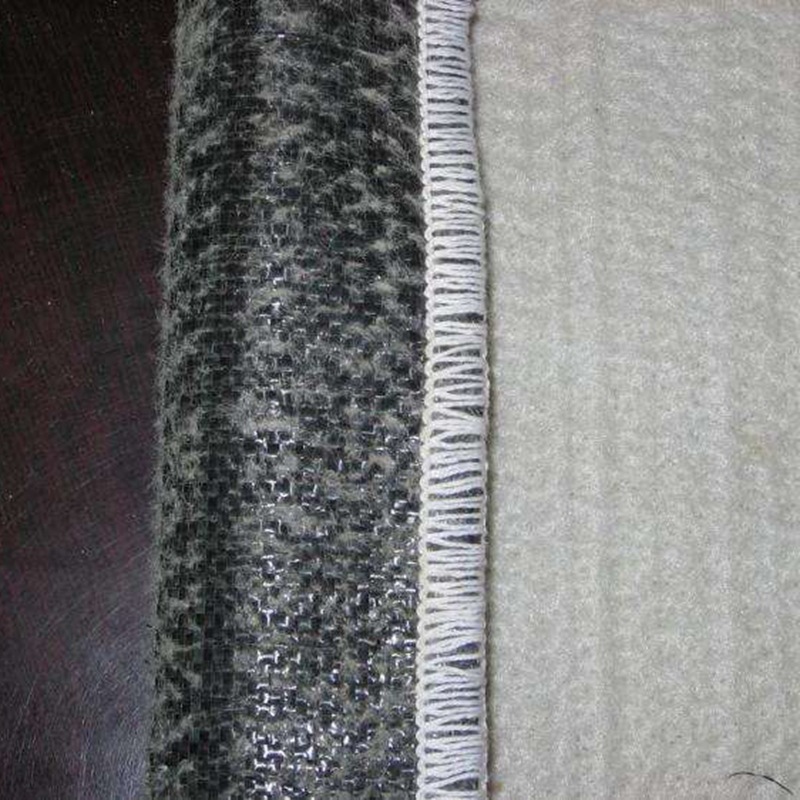

Composite geomembrane is formed by passing either one or both sides of the film through an oven for far-infrared heating, pressing the geotextile and geomembrane together with guide rollers. With advances in production technology, there is also a process for making composite geomembranes using the casting method. The forms include one fabric-one membrane, two fabrics-one membrane, two membranes-one fabric, and others.
The geotextile acts as a protective layer for the geomembrane, preventing damage to the protective waterproof layer. To reduce UV exposure and enhance aging resistance, it is preferable to use a buried installation method.
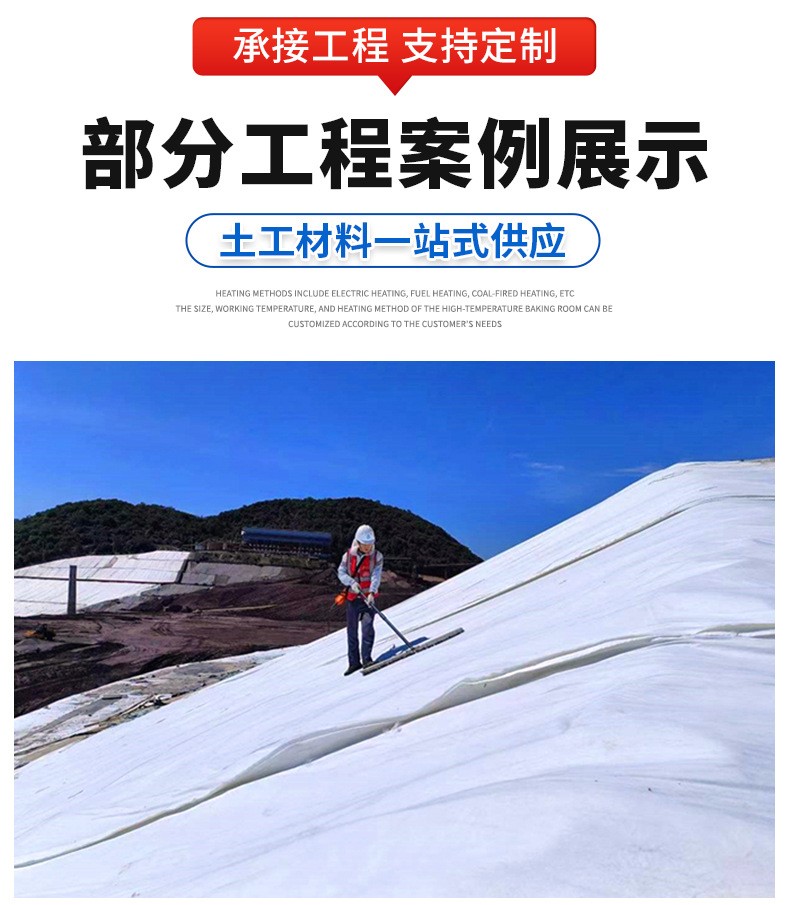
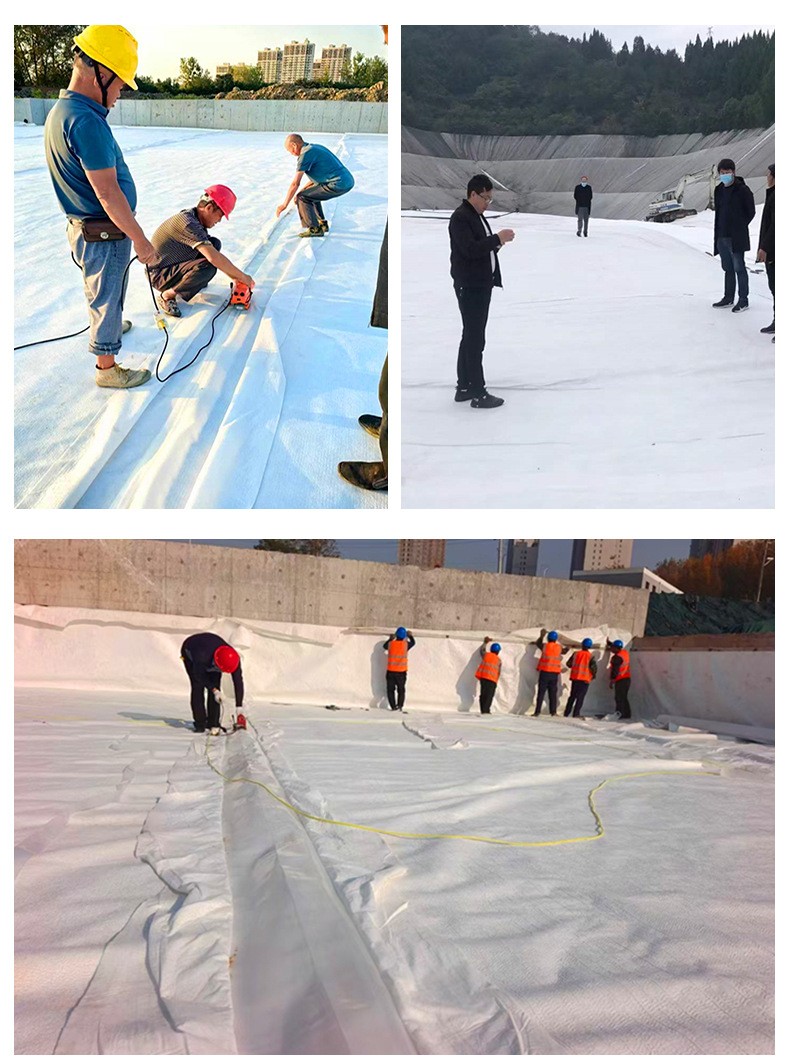
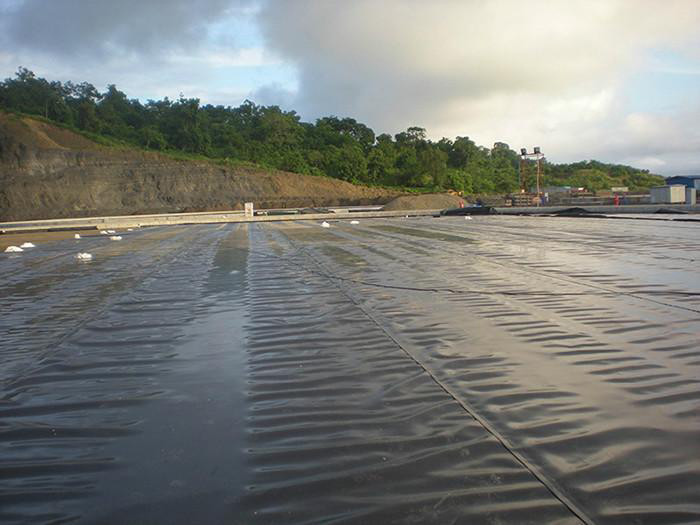
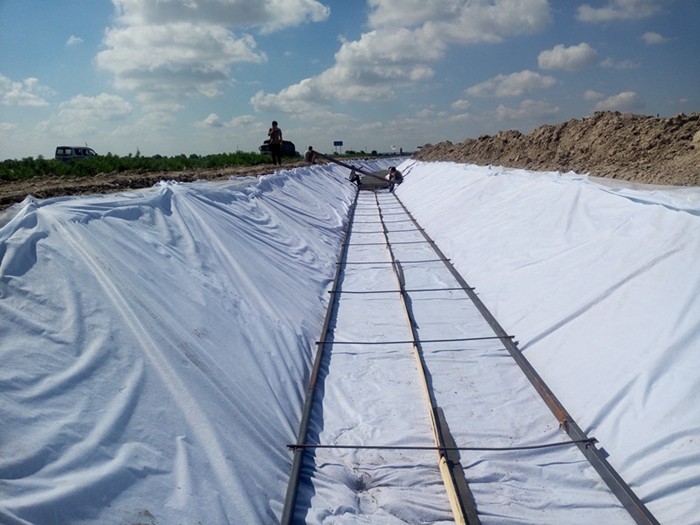
During construction, start by leveling the base with sand or clay of smaller particle size, then lay the geomembrane. The geomembrane should not be stretched too tightly; its ends should be buried in the soil in a wavy manner. Then, lay a transition layer of fine sand or clay about 10 cm thick on the geomembrane. Place 20–30 cm of rubble (or prefabricated concrete blocks) as an anti-erosion protective layer. During construction, efforts should be made to avoid dropping stones directly onto the geomembrane; it is best to install the protective layer simultaneously with laying the membrane.
The composite geomembrane should be connected to surrounding structures using expansion bolts and steel plates, with adhesive emulsion asphalt applied at the connection points (2 mm thick) to prevent leakage.