


Product Introduction
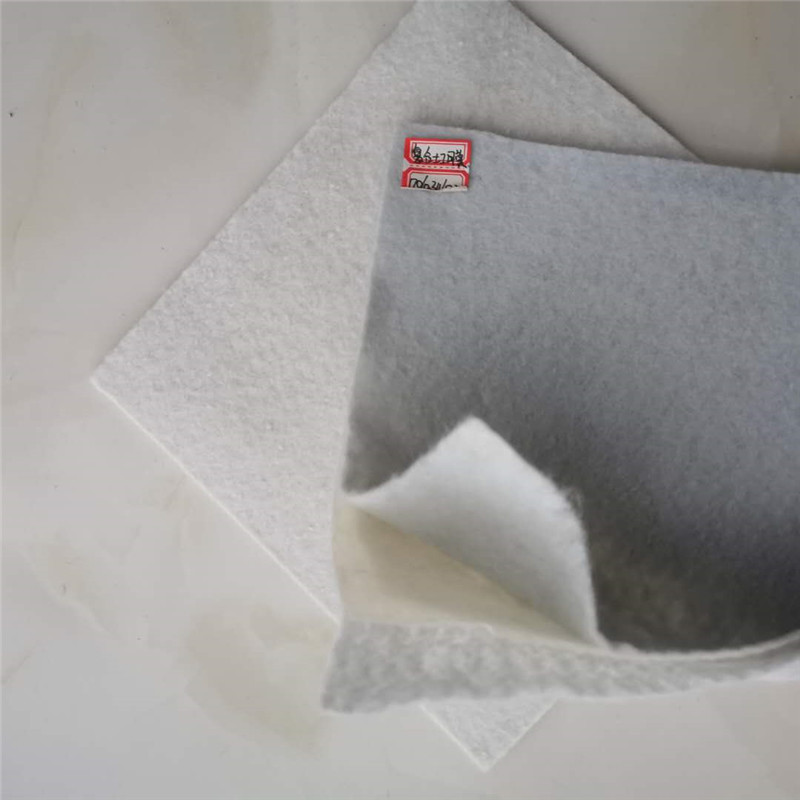
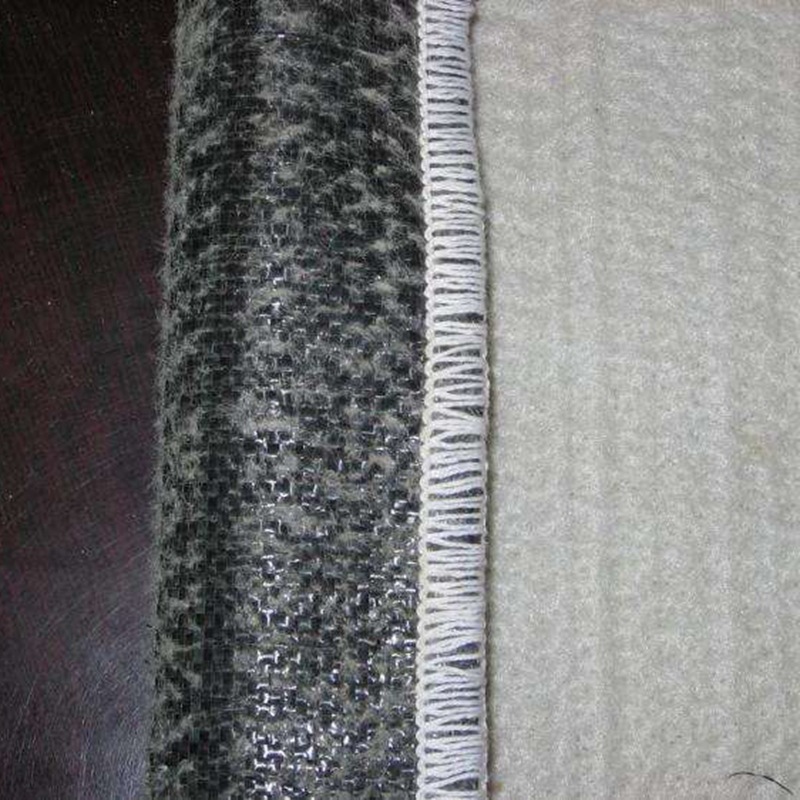
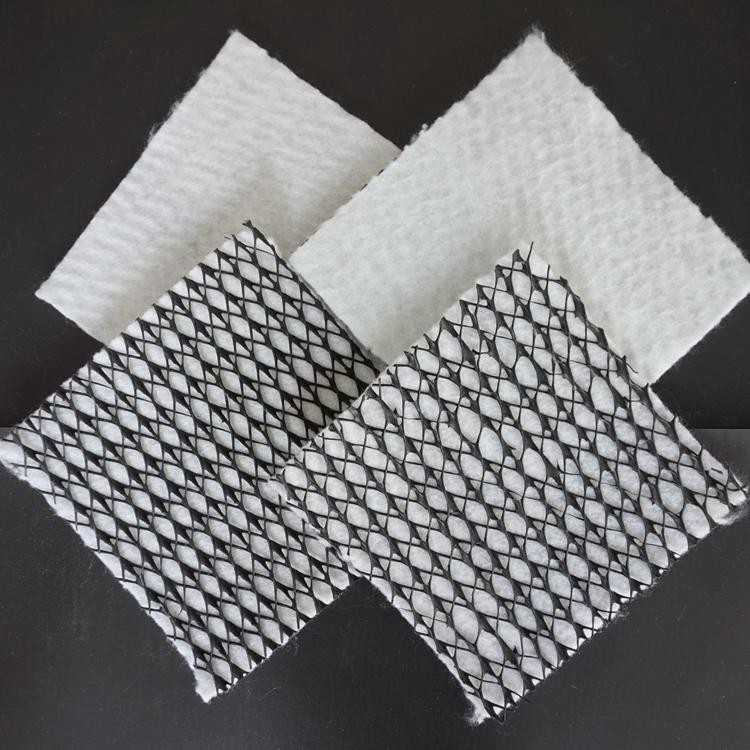
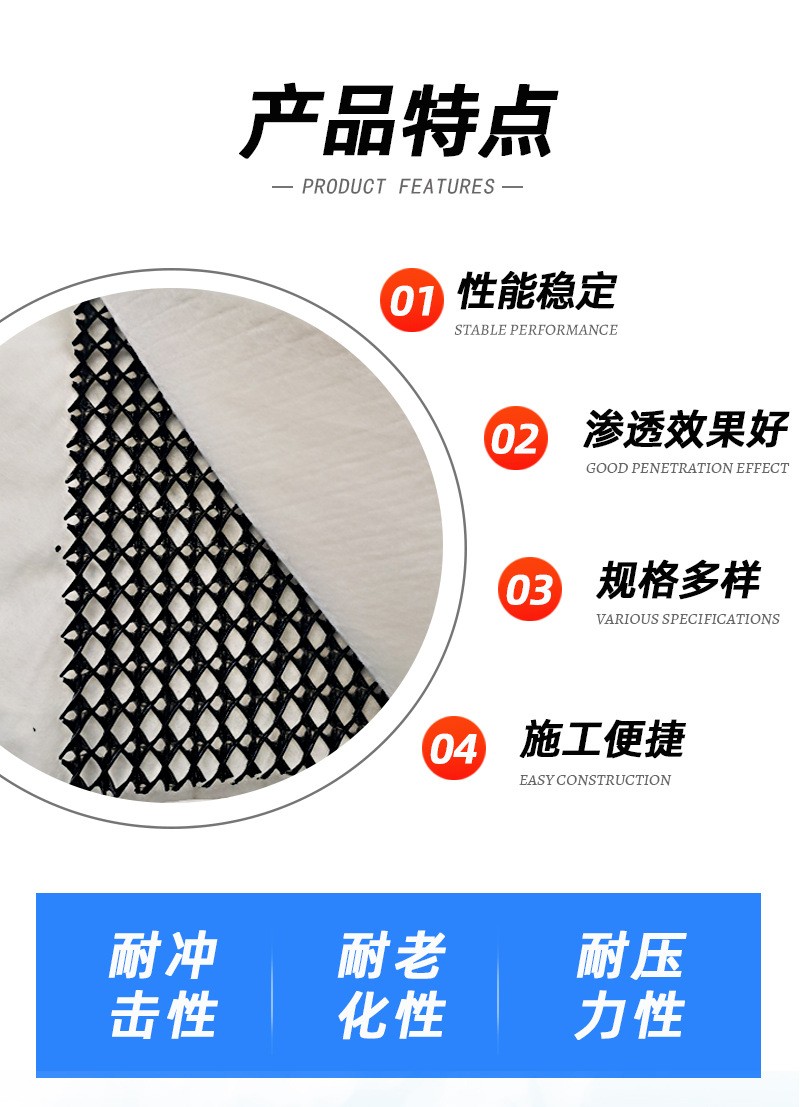
The three-dimensional composite drainage net is a new type of geosynthetic material. Its structure consists of a three-dimensional geonet core, with needle-punched perforated nonwoven geotextiles bonded on both sides. The three-dimensional geonet core includes a thick vertical rib, as well as a slanted rib on the top and bottom, which can quickly drain groundwater from roads. It also has a pore maintenance system that can block capillary water under high loads. Additionally, it serves as both a separator and a foundation reinforcement.
Functional Characteristics
1. Laid between the foundation and subgrade, it is used to drain accumulated water between the foundation and subgrade, block capillary water, and effectively integrate into the edge drainage system. This structure automatically shortens the drainage path of the foundation, significantly reducing drainage time, and also allows for a reduction in the amount of selected foundation materials (meaning materials with more fine particles and lower permeability can be used). It can extend the service life of the road.
2. Installing a three-dimensional composite drainage net on the base layer can prevent fines from the subgrade from entering the pavement base layer (i.e., it acts as a separation layer). Aggregate in the base layer may partially enter the upper portion of the geonet. In this way, the composite geodrain also has a potential function of restricting the lateral movement of the aggregate base, similar to the reinforcing effect of a geogrid. Generally, the tensile strength and stiffness of the composite geodrain are superior to many geogrids used for foundation reinforcement, and this restricting effect enhances the support capacity of the foundation.
3. After road aging and the formation of cracks, most rainwater enters the cross-section. In such cases, laying the three-dimensional composite drainage net directly under the pavement can replace a drainable foundation. The three-dimensional composite drainage net can collect moisture before it enters the foundation/subgrade. Additionally, a membrane layer can be wrapped at the bottom of the geonet to further prevent moisture from entering the foundation. For rigid pavement systems, this structure allows the road to be designed with a higher drainage coefficient (Cd). Another advantage of this structure is that it may help concrete hydrate more uniformly (studies are ongoing to determine the extent of this advantage). Whether for rigid or flexible pavement systems, this structure can extend the service life of the road.
4. Under northern climatic conditions, laying a three-dimensional composite drainage net can help alleviate the effects of frost heave. If the freezing depth is deep, the geonet can be placed at a shallower position within the subgrade to act as a capillary barrier. Frequently, it may also be necessary to replace it with frost-resistant granular subgrade, extending downward to the freezing depth. Frost-susceptible backfill can be directly placed on top of the three-dimensional composite drainage net up to the ground surface of the foundation. In this case, the system can be connected to a drainage outlet to keep the groundwater level at or below this depth. This potentially limits the growth of ice crystals, allowing traffic loads to remain unrestricted in spring thaw conditions in cold regions.