



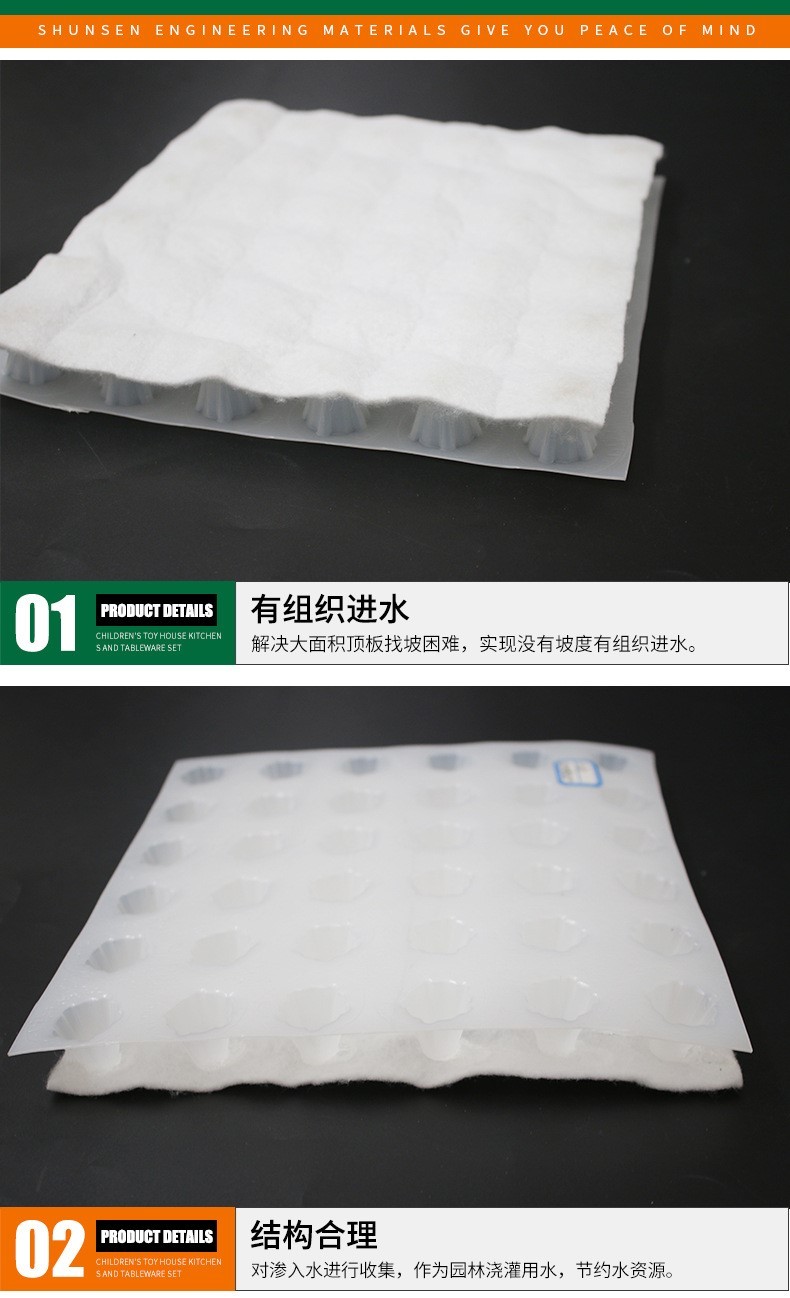
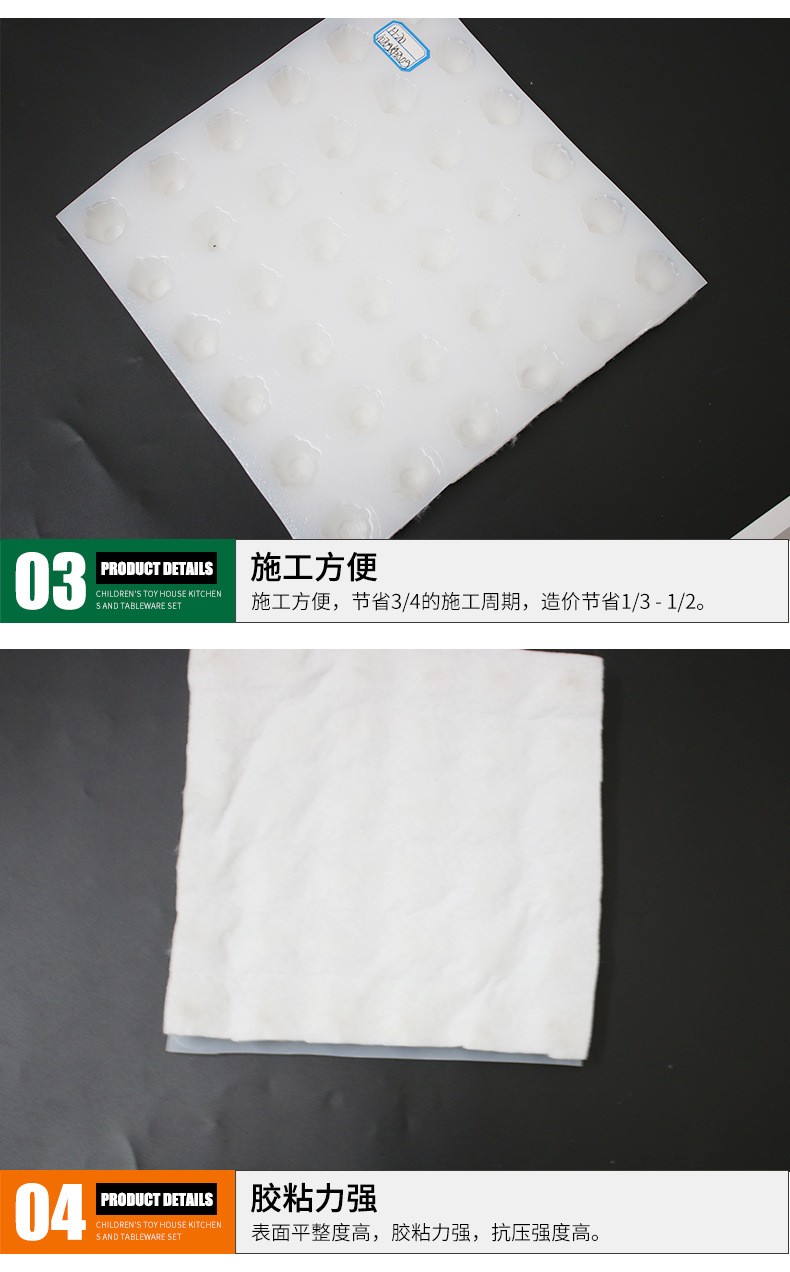
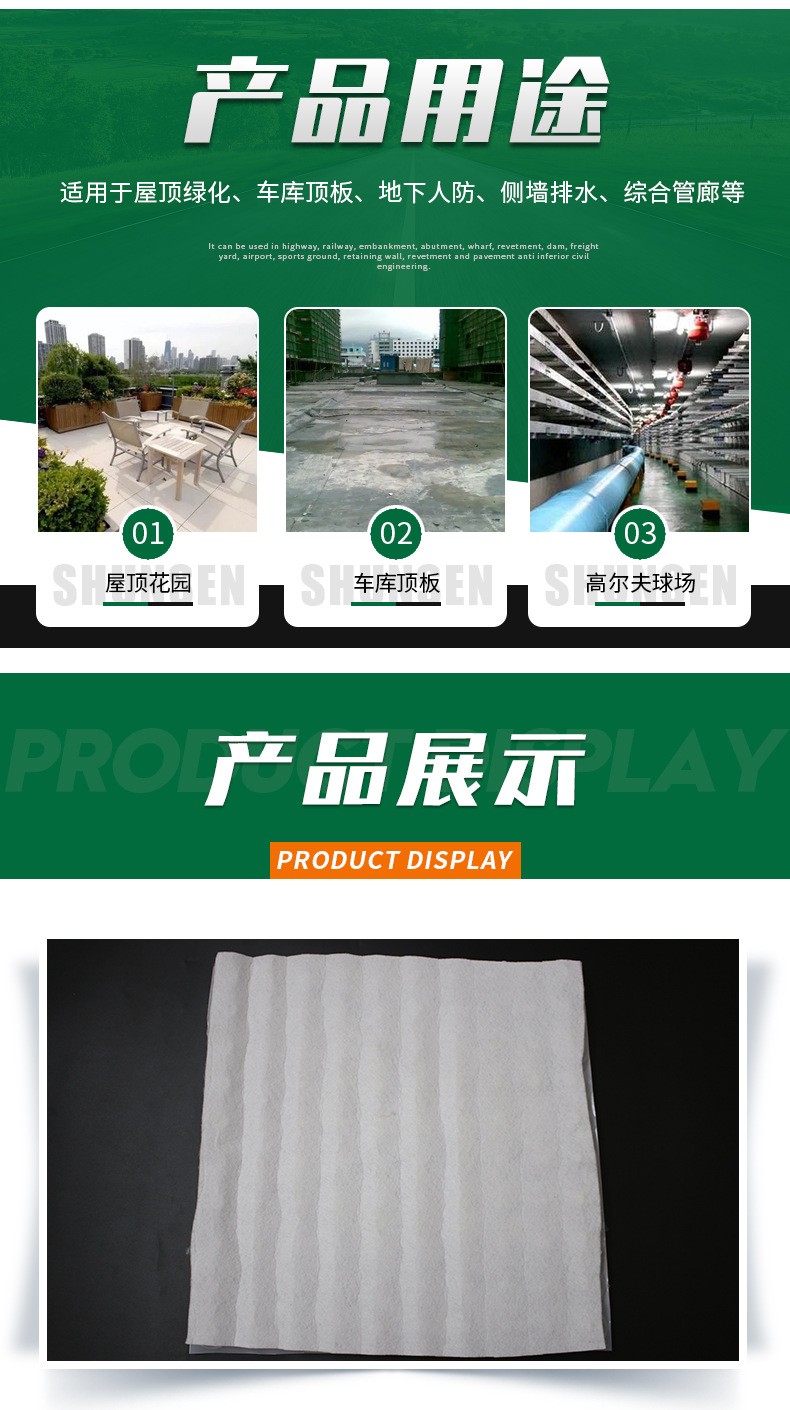
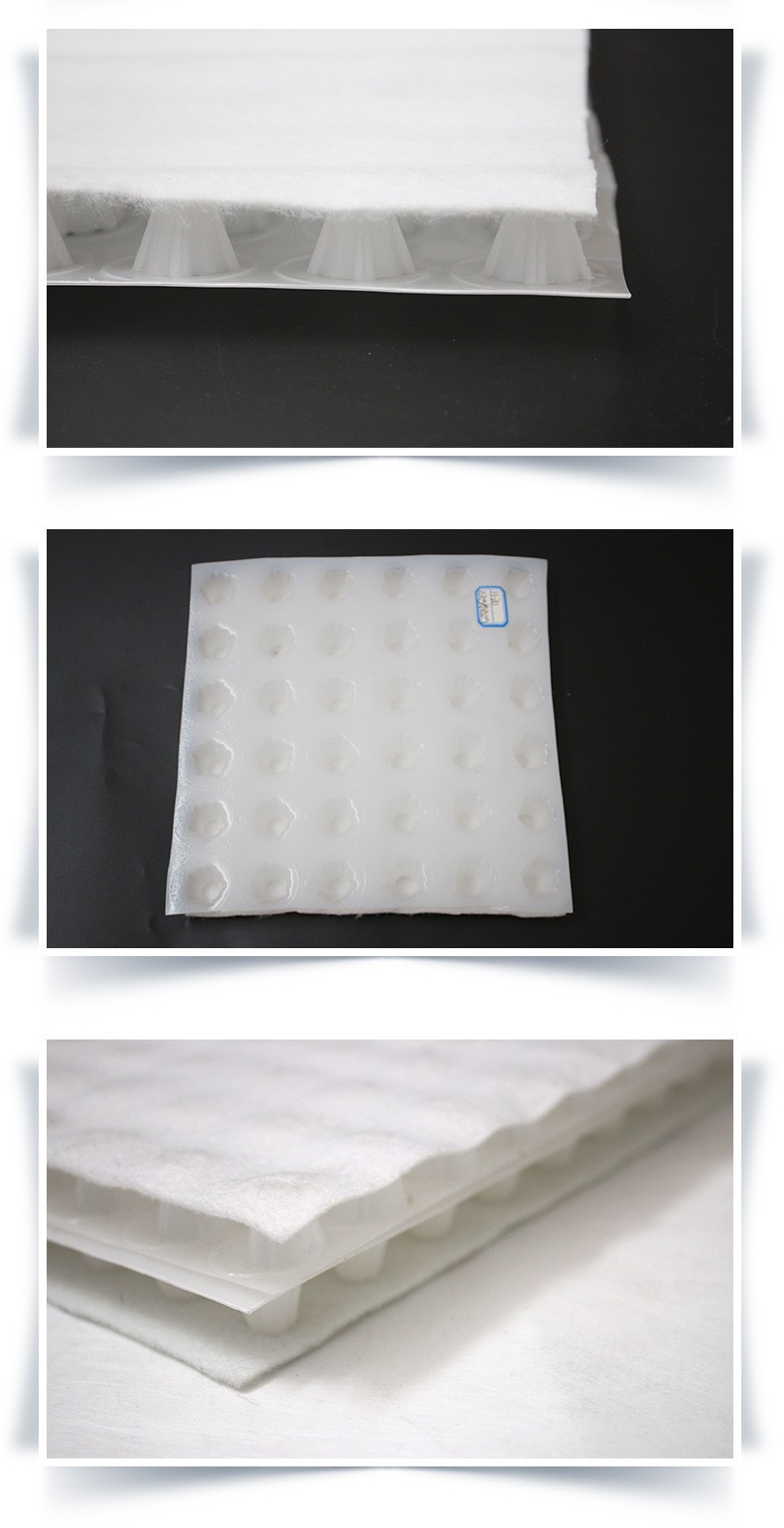
Siphonic composite drainage boards are a new type of geotechnical drainage material. Due to their drainage performance, compressive strength, and durability, they have been widely used in modern construction projects. This article will provide a detailed introduction to the structure, working principle, application range of composite drainage boards, and their importance in modern drainage systems.
1. Structure and Materials
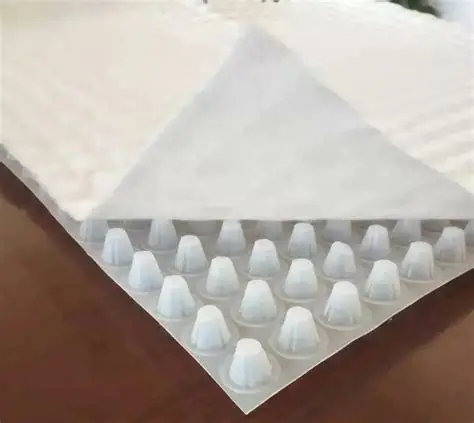
They are mainly made from high-density polyethylene (HDPE) resin particles processed through a vacuum forming process. Their structure features two specially designed layers:
Central ribs: Rigid and arranged longitudinally to form drainage channels.
-Cross-arranged ribs on the top and bottom: Provide support and prevent the geotextile from embedding into the drainage channel, maintaining stable drainage performance even under high loads.
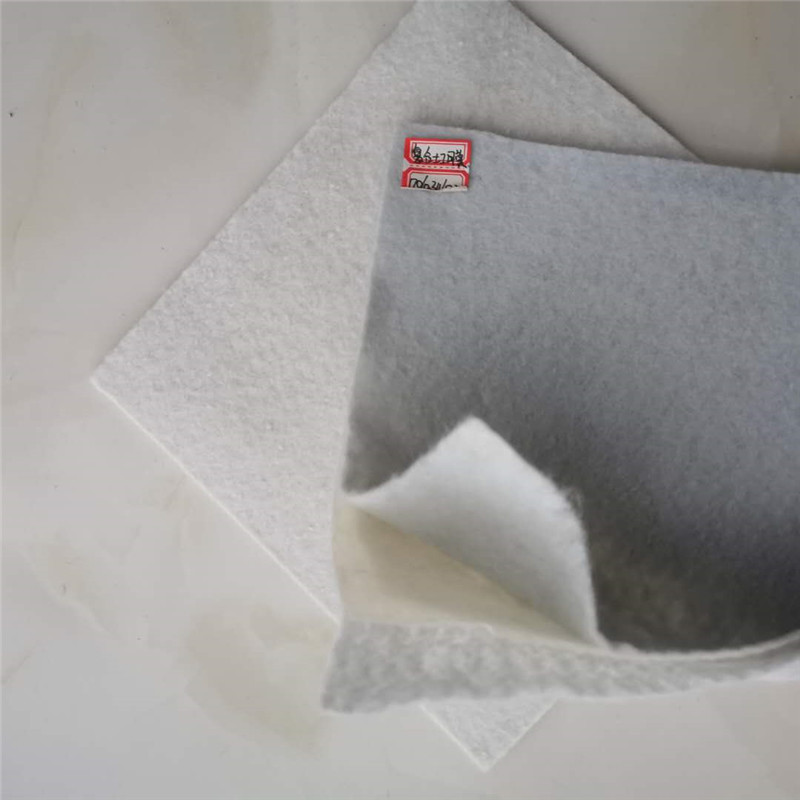
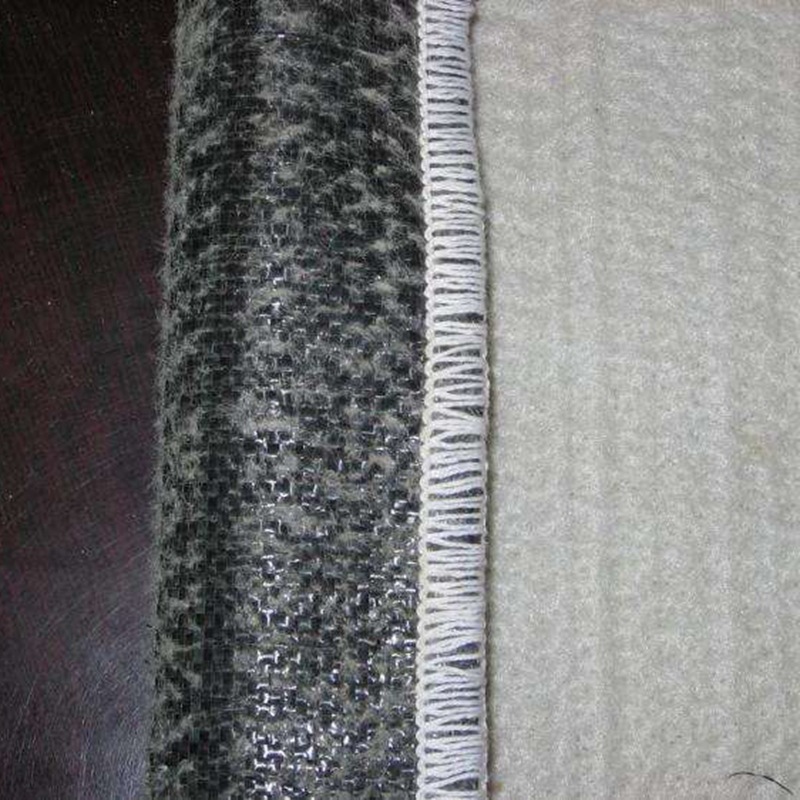
Additionally, the surface of the drainage board is laminated with a special dual-strength geotextile, offering comprehensive functions of "filtering—draining—ventilation—protection," making it one of the current drainage materials.