

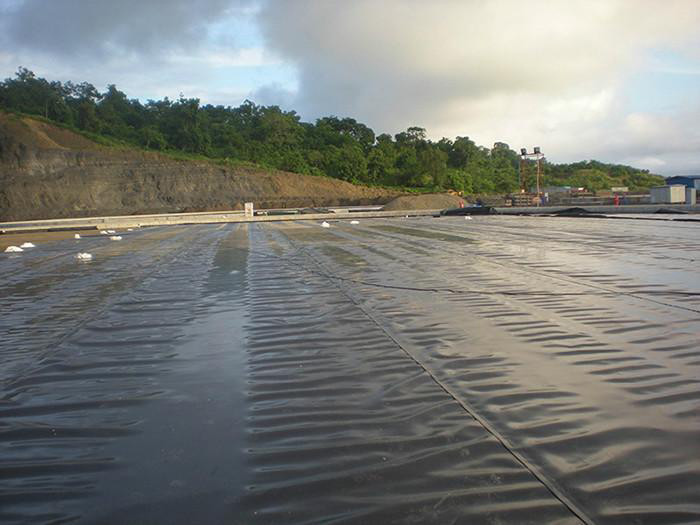

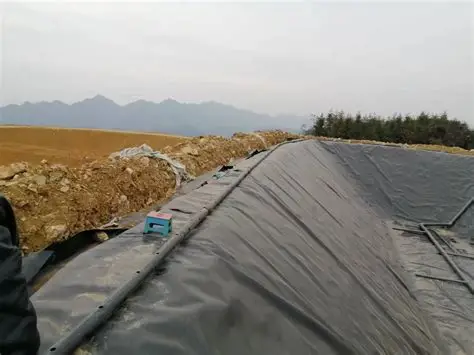
Geomembranes are commonly used materials in engineering for seepage prevention. In practical applications, geomembranes are not only used in the warm southern regions but also have a wide market and extensive applications in the cold northern regions. In particular, in recent years, the demand for geomembranes in the northern provinces of China, such as the three northeastern provinces (Jilin, Liaoning, Heilongjiang), Inner Mongolia, Xinjiang, Tibet, Qinghai, Gansu, and Ningxia, where temperatures are relatively low, has been remarkable. High-quality cold-resistant and low-temperature-resistant geomembranes shine and are widely used in these areas.
Using cold-resistant and low-temperature-resistant geomembranes can effectively reduce tearing of geomembranes, seam cracking, and embrittlement caused by low temperatures, greatly extending the service life of seepage prevention projects. Cold-resistant and low-temperature-resistant geomembranes have excellent low-temperature performance; high-quality ones can pass embrittlement tests at -70℃ in laboratory environments. In actual construction environments, they can be used for more than five years at temperatures above -50℃ without becoming brittle, and for more than ten years at temperatures above -20℃ without degradation.
The standards for cold-resistant and low-temperature-resistant geomembranes are generally higher than those for ordinary geomembranes.