

Precautions for Geomembrane Installation
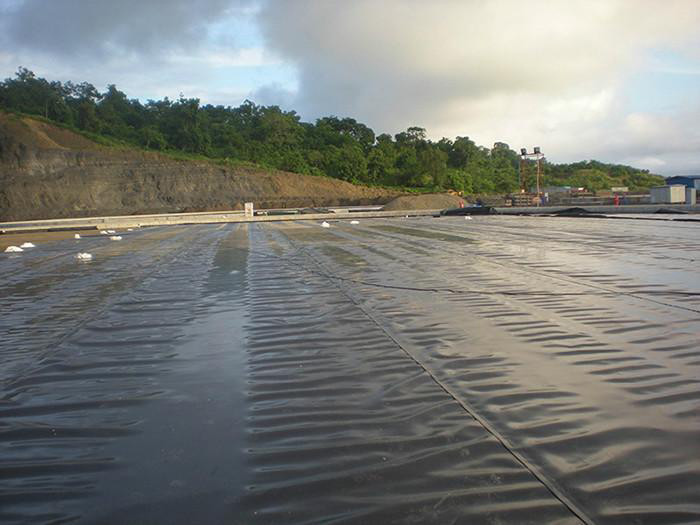
Improper installation can prevent the geomembrane from performing its function. Careful construction is a key step in ensuring the effectiveness of a geomembrane in seepage prevention projects.
I. Requirements for the geomembrane construction site:
1. Before laying, a comprehensive inspection of the base site should be conducted in coordination with relevant departments. The base should be solid and level. Within a vertical depth of 25mm, there should be no roots, debris, stones, concrete particles, rebar ends, glass fragments, or other foreign objects that could damage the waterproof membrane. Use a roller to remove tire marks and uneven ground. Additionally, any ground protrusions greater than 12mm should be broken or compacted.
2. When the geomembrane is laid on backfill soil, the compaction of the backfill should not be less than 95%.
3. The site foundation should be free of seepage, silt, standing water, organic residues, and harmful substances that could cause environmental pollution. Base corners should be smooth, and generally, the radius of curvature should not be less than 500mm.
II. Geomembrane construction technical requirements:
1. Laying and welding of the geomembrane should be carried out in temperatures above 5 °C, with wind levels below grade 4, and in the absence of rain or snow.
2. Construction process for the geomembrane: Laying the membrane — welding seams — inspection.
3. The overlap between membranes should be no less than 10cm. Typically, seams should be aligned parallel to the main slope direction.
4. No transverse seams are allowed within 1.5 meters of the slope corners.
5. The surfaces to be welded must be free of dirt, sand, standing water (including dew), or other debris that could affect the weld quality. Clean the area thoroughly before welding.
6. At the start of welding each day (early morning or after lunch break), a test weld must be performed on-site, and formal welding may proceed only after it passes inspection.

Email