
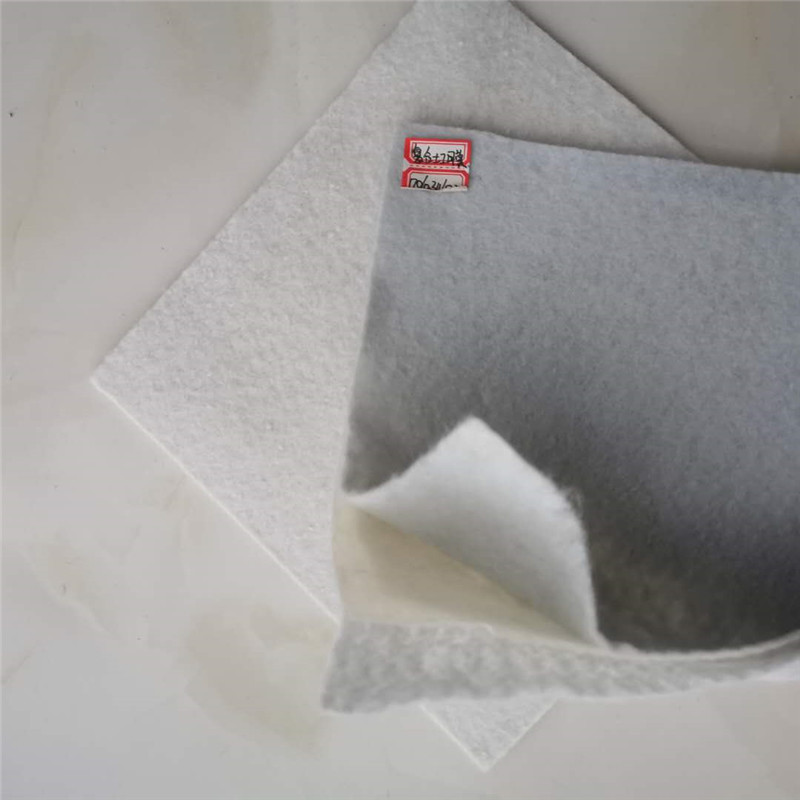


Construction Process of Waterproof Geotextile: The substrate must be solid, flat, and clean, free of dust, grease, wax, release agents, or other debris; if the base surface has pores, cracks, or unevenness, it must be repaired and leveled with cement mortar in advance. It is recommended to attach plastic strips at expansion joints, add a layer of non-woven fabric at nodes, and use Leibangshi pipe grouting material to fill pipe openings. The corners should be rounded (or V-shaped). The base surface should be fully moistened but without standing water. Newly poured concrete surfaces (including plaster surfaces) should be allowed to set before construction.
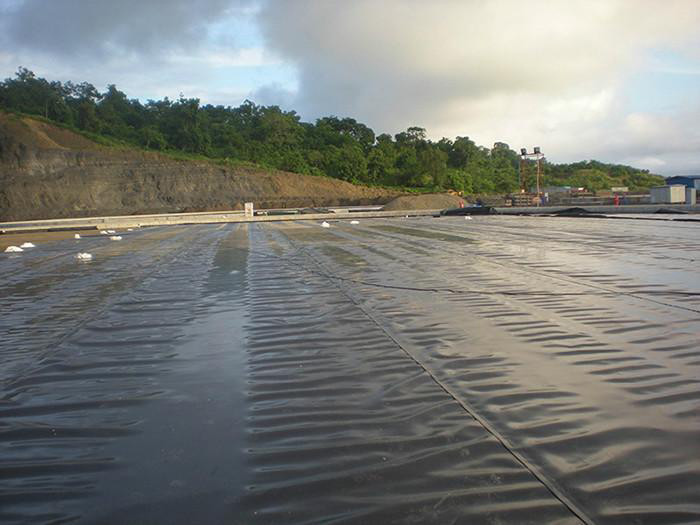
During construction, first level the base surface with fine sand or clay, then lay the geomembrane. The geomembrane should not be stretched too tightly; the ends should be buried in the soil in a wavy manner. A 10cm layer of fine sand or clay should be spread on top as a transition layer. Then, 20-30cm rubble (or prefabricated concrete blocks) should be placed as a protective layer against erosion. During construction, care should be taken to prevent stones from directly falling on the geomembrane. Lay the membrane while constructing the protective layer. Connections between the composite geomembrane and surrounding structures should use expansion bolts and steel plate strips for anchoring, with the connection area coated with 2mm of emulsified asphalt to prevent leakage.
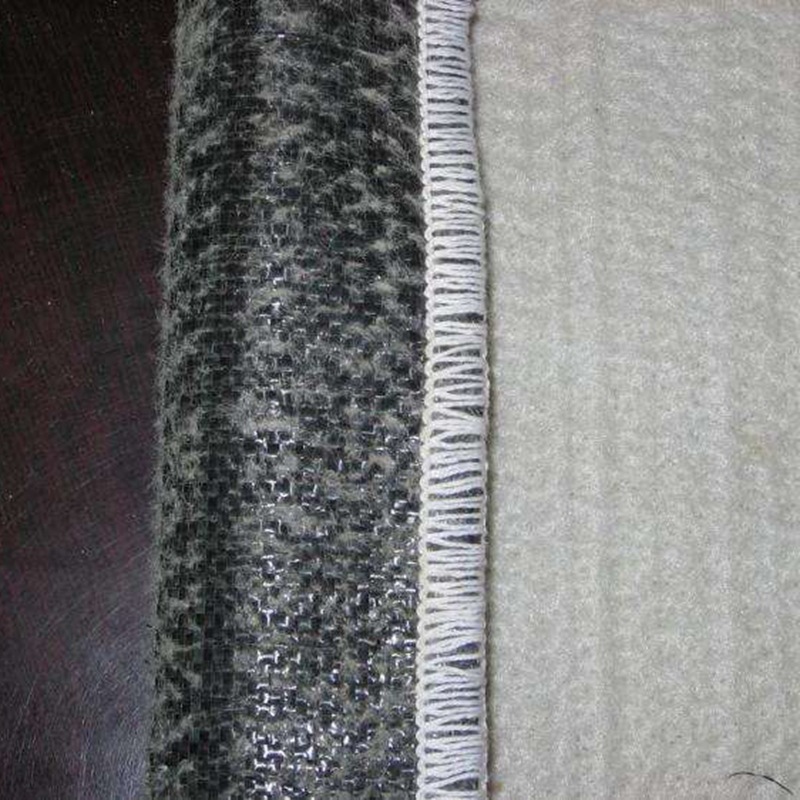
Seam treatment of the composite geomembrane is a crucial step and directly affects the waterproofing effect.
Types of seams:
1. Overlap: The overlap width should be greater than 15cm;
2. Heat welding: Suitable for slightly thicker geomembrane materials, with a seam overlap width of no less than 5cm (gluing is not recommended, as prolonged water immersion can cause the glue to fail and reduce waterproofing performance).
Construction of Waterproof Geotextile:
1. The bottom waterproof geomembrane (specifications: 300g/0.5mm/㎡ two-fabric, one-membrane PE waterproof geotextile) should be laid from downstream to upstream, from one side of the excavation to the other;
2. The side waterproof geomembrane should be laid from top to bottom, from the bottom of the slope to the top. Connections of the geomembrane should be made using a specialized welding machine (weld twice with a minimum overlap of 10cm);
3. Procedure for waterproof geomembrane construction: Level and inspect the bottom and slope earthworks → Lay and cut the geomembrane → Align and match edges → Overlap construction → Testing → Repair → Re-inspection → Acceptance → 30mm cement mortar.