

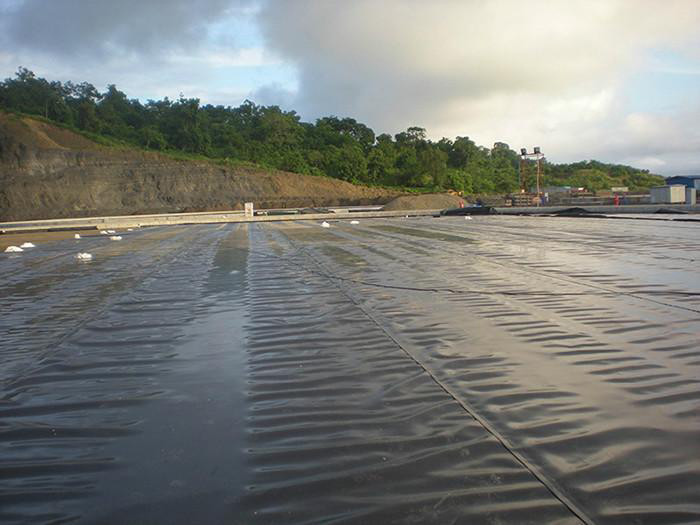

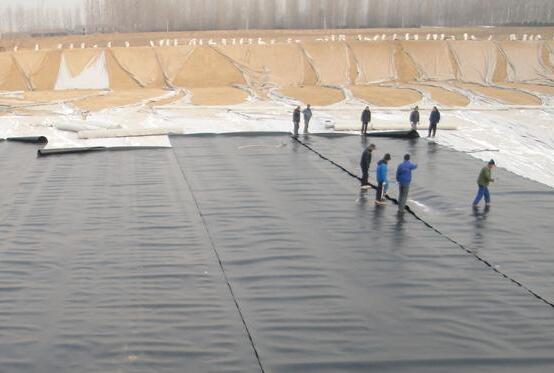
Geomembranes are suitable for use in many types of projects. Large-scale projects include waterproofing works for landfills, river regulation, reservoirs, and tailings dams. Small-scale projects include pig and cattle farms' oxidation ponds, lotus ponds, fish ponds, shrimp ponds, and other aquaculture applications. Many customers ask, 'What should be done if the geomembrane leaks?' Below, the geomembrane manufacturer explains:
Geomembranes are made from high-density polyethylene (HDPE) pellets. The permeability coefficient of geomembranes is less than or equal to 1.0*10^-13, which means that leakage from geomembranes is almost zero.
However, external forces may damage the geomembrane and cause leakage. Welders should take the following measures:
1. If there is large-scale damage to the geomembrane, the damaged membrane should be removed, a new geomembrane should be laid, and welding machines should be used to process the welds. Ensure the welding quality to prevent future leakage.2. If there is small-scale damage to the geomembrane, first measure the damaged area. Then, cut a piece of new geomembrane roll about 20% larger than the damaged area and cover the damaged section. Use a welding machine and extrusion welder to weld it in place.