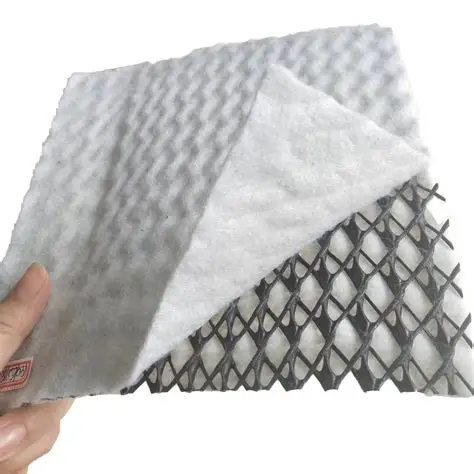
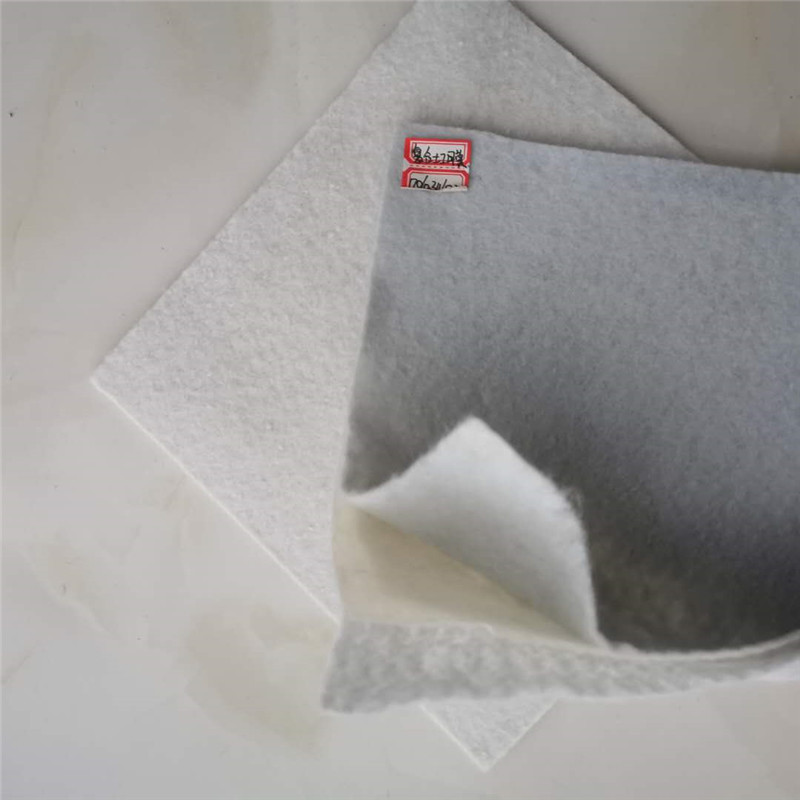

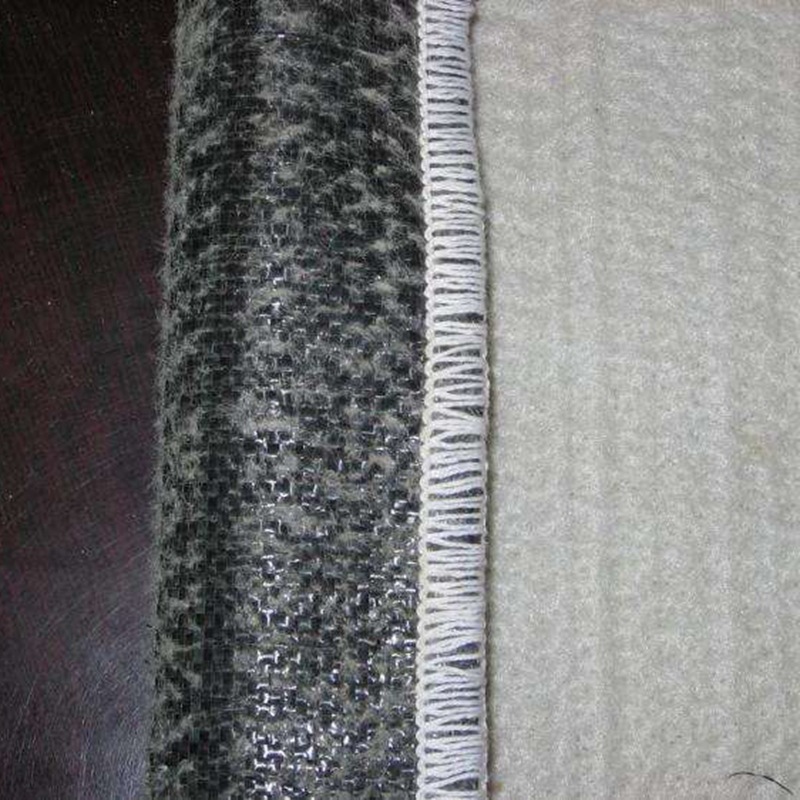

Composite drainage net (also known as three-dimensional geocomposite drainage board) is a new type of drainage material made of high-density polyethylene (HDPE) formed into a three-dimensional plastic network, bonded on both sides with permeable geotextiles. Its core structure includes drainage channels formed by vertical ribs in the middle and intersecting support ribs above and below, which can replace traditional gravel layers. It features high tensile strength (≥36.5 kN/m), pressure resistance (long-term compressive capacity of 3000 kPa), and stable drainage performance (permeability up to 2500 m/d), while also providing filtration, ventilation, and foundation reinforcement functions.
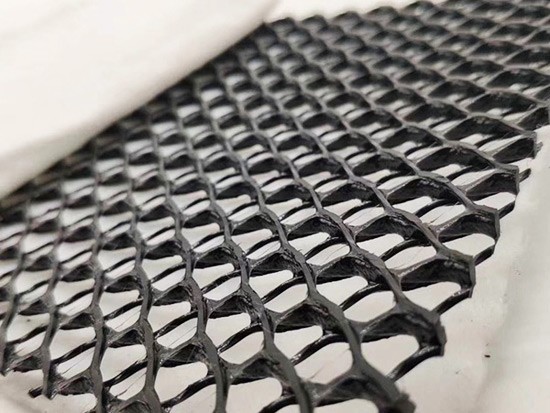
The composite drainage net is a new type of geosynthetic drainage material. Made from high-density polyethylene (HDPE) through a special extrusion molding process, it has a unique three-layer structure. The central ribs are rigid and arranged longitudinally, forming drainage channels, while the intersecting ribs above and below provide support to prevent the geotextile from pressing into the drainage channels, maintaining high drainage efficiency even under significant loads. When combined with permeable geotextiles bonded on both sides, it offers comprehensive performance of "filtration--drainage--ventilation--protection," making it one of the most ideal drainage materials currently available.
Product Applications:
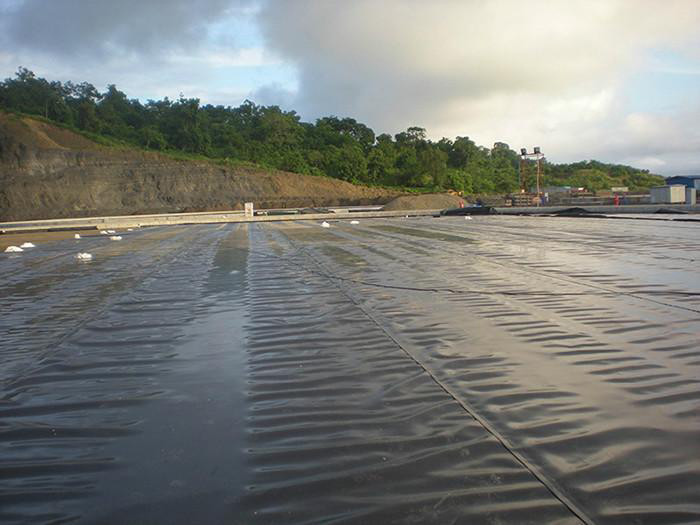
Mainly used in drainage projects for railways, highways, tunnels, municipal engineering, reservoirs, and slope protection, showing significant effectiveness.
Product Features:
1. Strong drainage capability (equivalent to one meter of gravel drainage).
2. High tensile strength.
3. Reduces the likelihood of geotextile embedding into the core, maintaining long-term stable drainage.
4. Can withstand long-term high compressive loads (about 3000 kPa).
5. Corrosion-resistant, acid and alkali-resistant, long service life.
6. Easy construction, shortens construction time, and reduces costs.