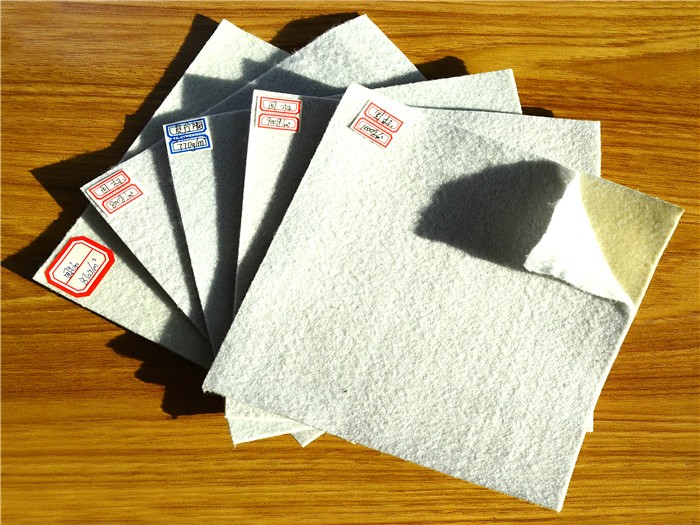
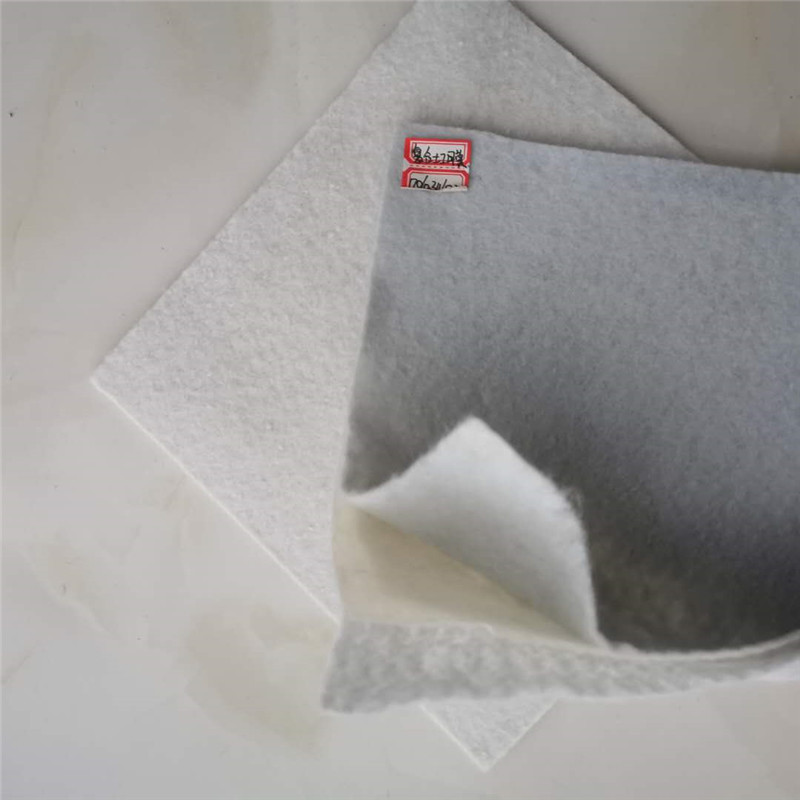

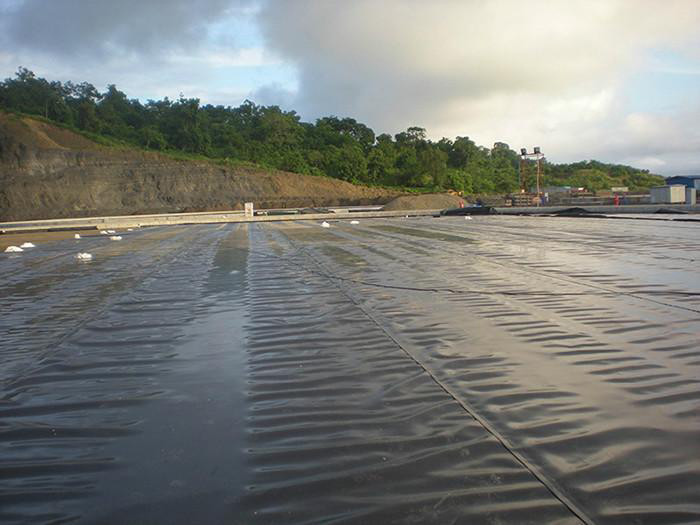
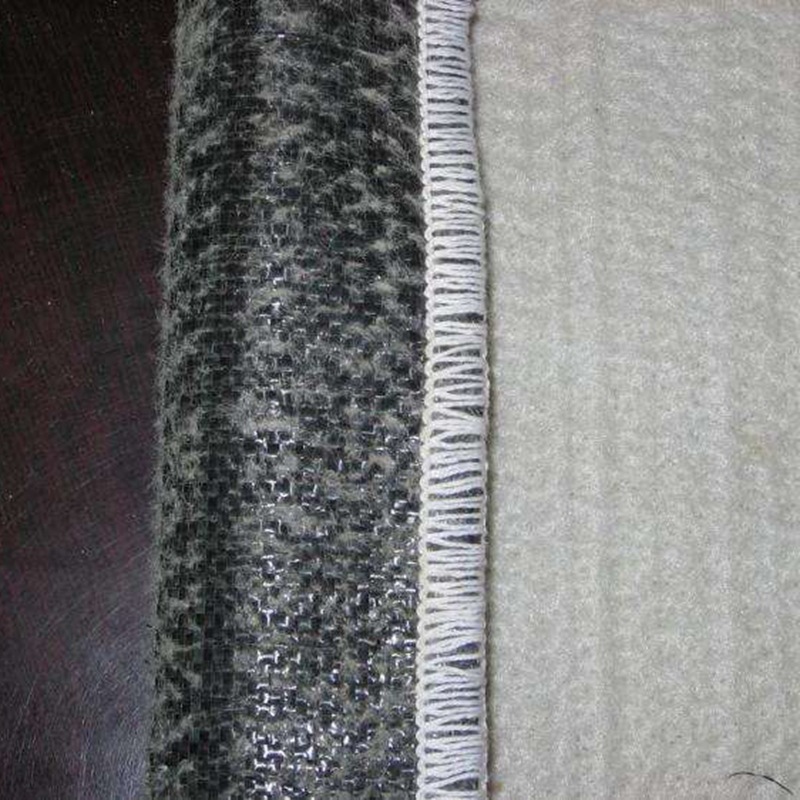

The welding of two fabrics and one membrane can be done using the hot-melt welding method. Splicing includes sewing and welding of the two fabrics and one membrane. For welding quality, welding should be done as much as possible in the factory. However, for construction convenience, the width of the two fabrics and one membrane should not be too wide and must be spliced on site.
The quality of welding two fabrics and one membrane is crucial to the impermeability performance of the composite geomembrane. Therefore, it is essential to ensure proper welding and welding quality. As such, the welding of the two fabrics and one membrane should be carried out on-site by professional technicians sent by the manufacturer, who will operate, guide, and train using specialized welding equipment for two fabrics and one membrane.
Before welding, use a heat gun to remove sand, dirt, and other debris from the membrane surface to ensure cleanliness and welding quality. Prior to formal welding, conduct a test weld according to the construction temperature to determine walking speed and welding temperature, generally maintaining a speed of 1.5–2.5 m/s and a welding temperature of 220–300°C. For splicing, there are two weld seams, each 10mm wide, with a 10mm gap between them, which is used to check the quality of the welds. Welding issues of two fabrics and one membrane in farmland water-saving irrigation.