


HDPE Geomembrane Price and Construction Plan
1. HDPE Geomembrane Installation Technical Requirements
(1) The geomembrane must be dry and clean, and only qualified products can be used; the surface of the geomembrane must not have oils, fuels, chemical splashes, or chemical stains that damage it.
(2) The area where the geomembrane is laid must be free of matches, lighters, chemical solvents, or similar items.
(3) Construction on rainy days must adopt feasible rain-day construction measures and can only proceed after confirmation by the owner's representative.
(4) As a principle, the geomembrane laid on a given day should be welded on the same day.
(5) During installation, wrinkles and creases in the geomembrane should be avoided; adhesive sticking of the geomembrane roll must be prevented. High temperatures during transport or storage can cause such issues. If found, the relevant unit must be notified.
(6) Only approved equipment, toolboxes, or tool bags are allowed on the surface of the geomembrane; equipment and tools should not be placed on the geomembrane surface unless in use. Work shoes must be soft, flat, and heelless.
(7) When adjusting the position after laying the geomembrane, care must be taken to protect the already installed impermeable membrane.
(8) Anchoring the geomembrane should use reasonable and flexible methods based on the site terrain.
(9) Seam overlap width: 80–100 mm.
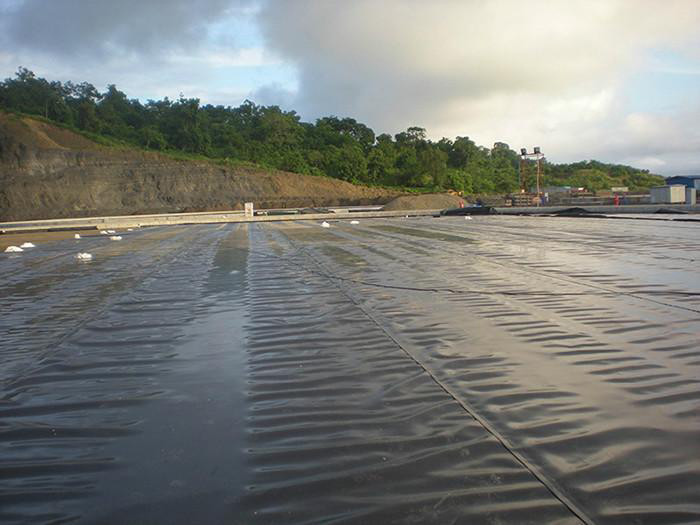
(10) Laying should not create wrinkles; after laying, it should naturally relax, adhere closely to the support layer, and must not have any suspension.
(11) When laying, allowance for thermal expansion and contraction should be provided according to temperature changes, site terrain, and material performance requirements. The direction and position of seams and overlaps should be reasonable to avoid stress concentration areas.
(12) All pressure test holes on the geomembrane surface must be clearly marked and then repaired with geomembrane patches or extrusion welding.
(13) Sufficient temporary ballast or ground anchors (sandbags or geotextile rolls) are required during construction to prevent the laid geomembrane from being blown away by strong winds. The ballast or ground anchors must not damage the geomembrane. In strong winds, the geomembrane must be temporarily anchored, and installation work should stop.
(14) All data related to construction quality, including laying, welding, repairing, and testing of the geomembrane, must be clearly, permanently recorded and marked by the installation unit.

Email