
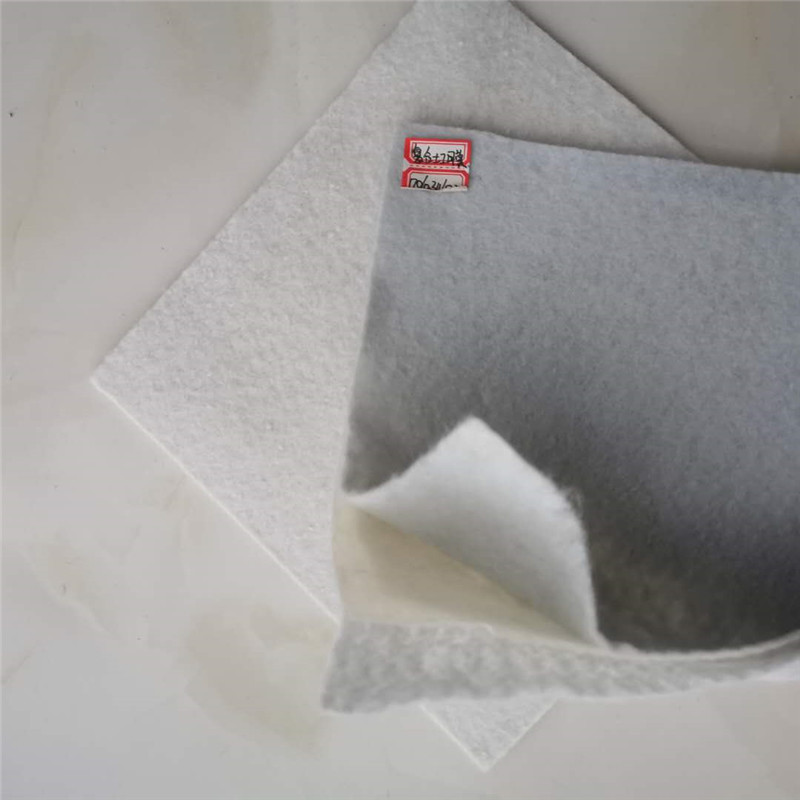

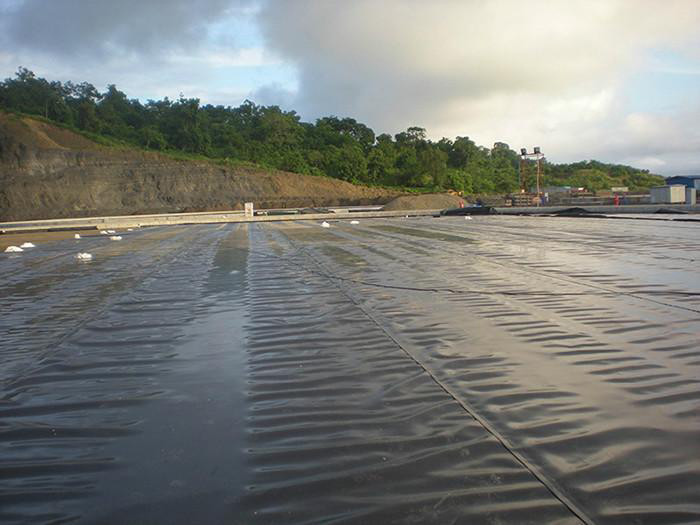
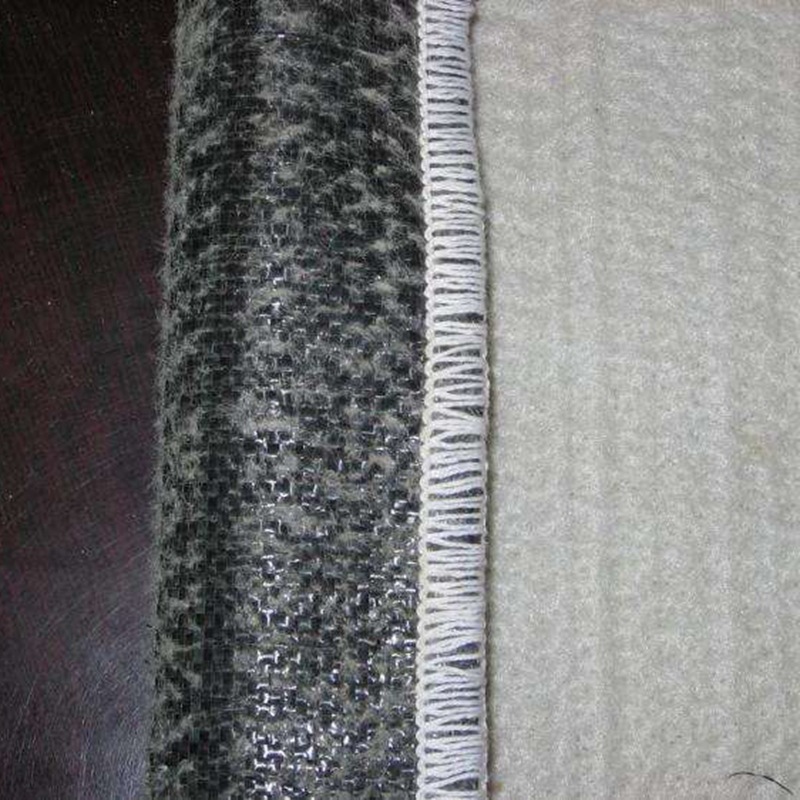

The emergence of various new types of materials today can be said to have very good effects for many manufacturing industries, especially in some engineering constructions. At the construction site of composite geomembranes, it is essential to pay attention to proper laying: it should not be too tight, must not wrinkle, and the pieces must be firmly joined. It is necessary to strictly follow technical standards. Composite geomembranes have much better performance than single membranes and offer more functions. Composite geomembranes are also easier to construct.
When a single membrane is punctured, it leaks a lot and loses its impermeable effect. After combining with a layer of geotextile, the mechanical properties such as tensile and puncture resistance are greatly improved, preventing the membrane from being easily damaged during transportation and construction. If a puncture occurs, the geotextile can limit substantial water leakage, giving more time for fault repair. Due to the drainage function of geotextiles, seepage water or pore water on the back of the membrane can be smoothly discharged, eliminating the risk of sliding instability caused by the membrane being lifted by water and air reverse infiltration.
It also increases the friction coefficient at the contact surface with sand and gravel, ensuring good contact between the membrane and the dam body. When geomembranes are combined with certain special geosynthetic materials, composite geosynthetic materials are formed. Composite geosynthetic materials can combine the properties of different materials to better meet the requirements of specific projects. For example, composite geomembranes, geotextiles, and geomembranes are made into composite geomembranes according to the requirements of geotextile-to-geotextile compositions. Geomembranes are mainly used for impermeability. Geotextiles are used for reinforcement, drainage, increasing friction between the geotextile and soil, and filtration.